Guide · Races and the half marathon
Seoul running races, worth planning a trip around.
The races that locals actually train for, how the calendar is shaped, and what entering one looks like from the outside. Most Seoul road races have an English entry page these days; getting a number is usually about timing, not language.
The calendar
The races a Seoul runner builds the year around.
Two seasons matter, March/April for spring, and October/November for autumn, and most of the major races fall into one of them. Summer and deep winter are quiet on the road-race calendar; trail and ultra events fill the gap if you want them.
-
Seoul Marathon (Dong-A Marathon)
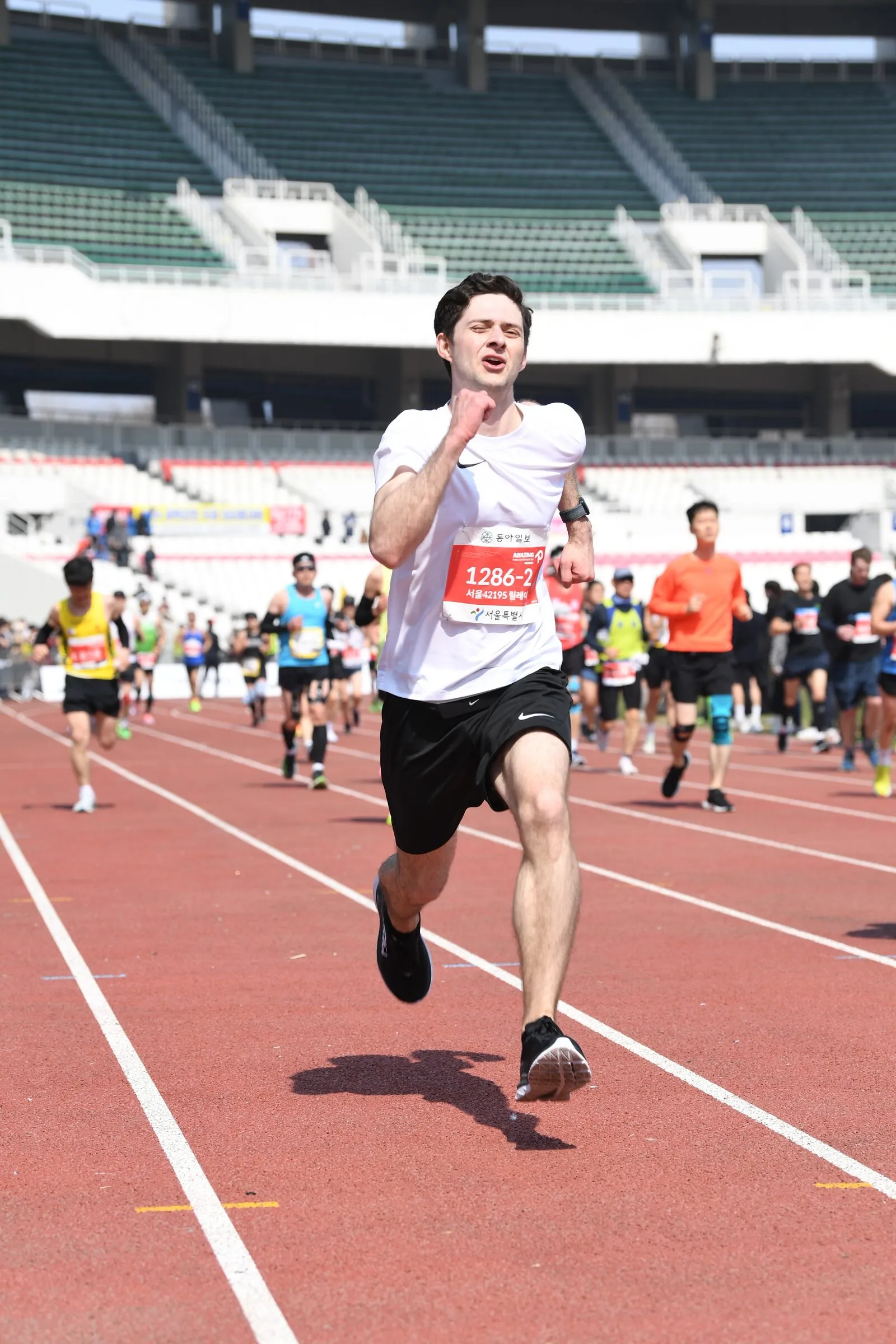
MarchThe big one. Course is fast and largely flat, finishes inside the 1988 Olympic Stadium. Heavily oversubscribed, the international entry usually fills within days of opening.
Official site:
seoul-marathon.com -
Seoul International Half Marathon
MarchRun by the same organisers as the Seoul Marathon. Sits a few weeks earlier on the calendar and uses a similar central-Seoul course. The right race if you want the Seoul experience but not the full distance.
Official site:
seoul-marathon.com -
JTBC Seoul Marathon
NovemberAutumn marathon, cooler weather, finishes near World Cup Stadium and the river. A common PR race for Korean amateurs because the course is fast and the temperature is right.
Official site:
marathon.jtbc.co.kr -
Chuncheon International Marathon
Late OctoberTechnically not Seoul, but the most celebrated road marathon in Korea. Run around a lake in peak autumn colour. Worth the train ride for any Seoul-based runner.
Official site:
chuncheonmarathon.net -
Gunsan Saemangeum International Marathon
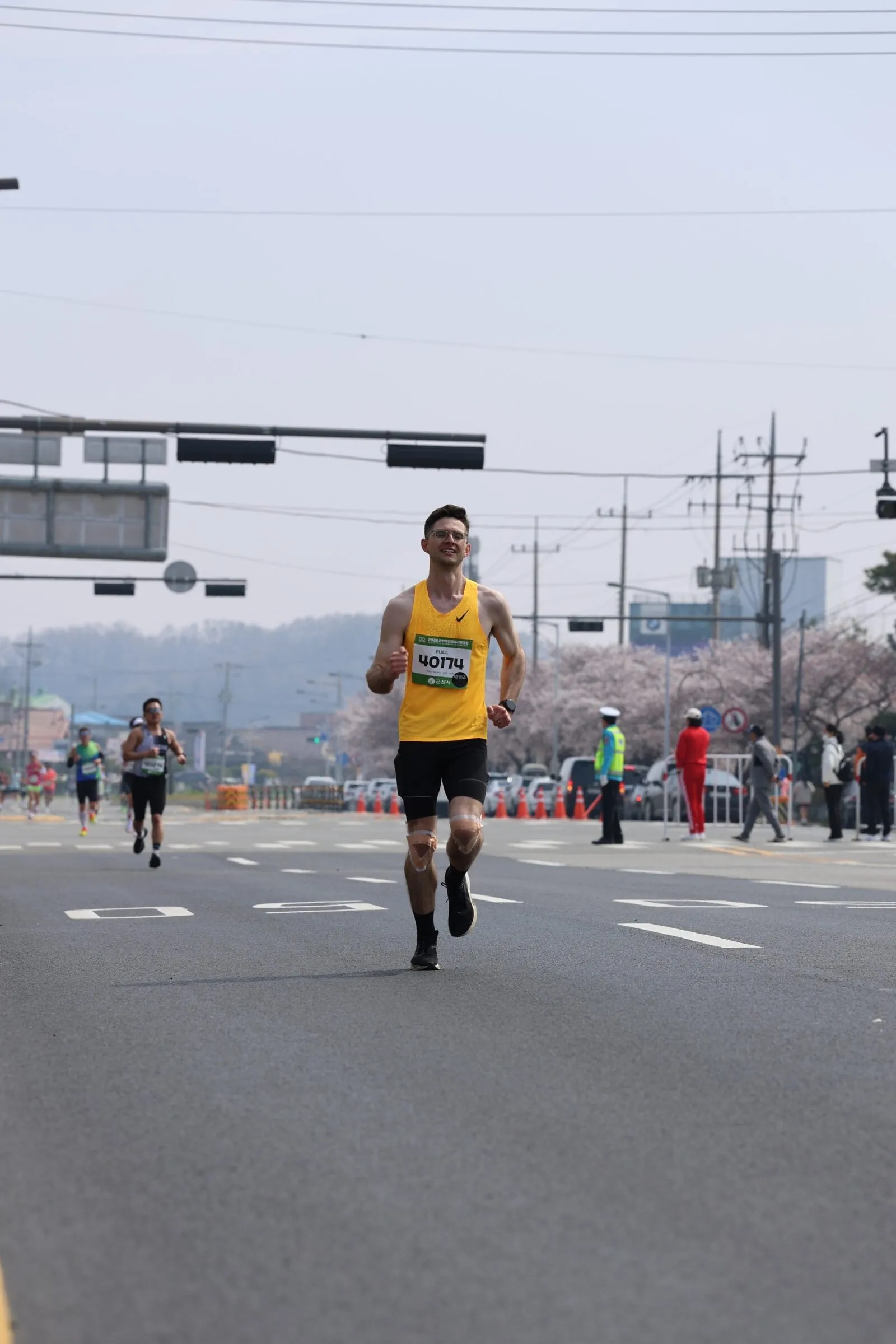
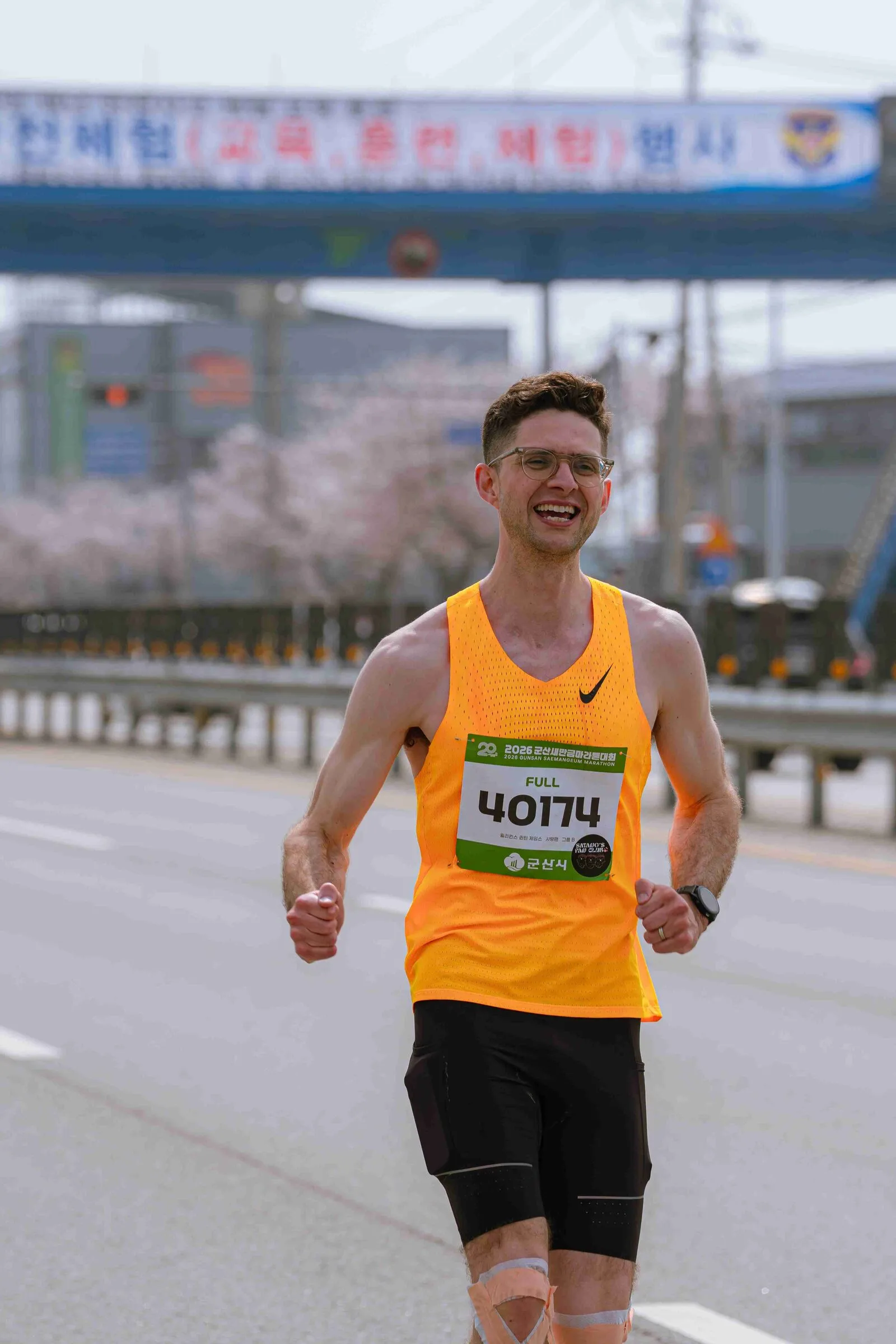
AprilA spring race down on the west coast, run along the world's longest sea wall. Cherry blossoms on the approach, flat course, popular spring-marathon target for Seoul runners. I run it most years.
Official site:
saemangeummarathon.com -
DMZ International Peace Marathon
MaySmaller and unusual, the course runs along sections of the DMZ buffer zone. Half-marathon distance is the longest available.
Official site:
dmzmarathon.com
Entering as a visitor
The practical bit.
Registration
The Seoul Marathon, the Seoul Half and JTBC all maintain an English-language international entry on their official sites. You will need a passport, an emergency contact, and a card that works internationally. The Seoul Marathon and JTBC tend to sell out their international allocation within a few days of opening; treat the registration date as a calendar event.
Bib pickup
For all the big races, bib pickup is the day before, at the expo. Bring your e-ticket and your passport. Same-day pickup is rarely allowed, turning up on race morning without your bib is the most common avoidable mistake foreign runners make at Korean road races.
Start logistics
The Seoul Marathon and the Seoul Half both start near Gwanghwamun in central Seoul, and the subway runs early on race day. Bag check is on-site and well-organised; you collect at the finish. Aid stations carry water and sports drink; food is bananas, chocolate pies, and a Korean staple at the finish line that is almost always a hot bowl of seolleongtang or tteok soup.
Pacing in Korean races
Korean road races are generally well-marshalled and on closed roads. Mile markers are kilometre markers. Pace groups exist for the larger races and are signed in both Korean and English numerals. The crowds at the Seoul Marathon are genuinely loud through the Sungnyemun and Dongdaemun sections; the JTBC course is quieter through Sangam but lively into the finish.
FAQ
Quick answers.
-
When is the Seoul Marathon?
Mid-to-late March each year. The exact date moves with the calendar; check seoul-marathon.com closer to the year you are planning.
-
When is the Seoul half marathon?
The Seoul International Half Marathon, run by the Seoul Marathon organisers, sits in March, usually a few weeks before the full marathon. The JTBC Seoul Marathon in November also offers a 10 km but not a half. For a half-marathon distance in Seoul itself in autumn, the smaller community races (Han River, district 10 km / half events) fill the calendar.
-
Can a visitor enter a Seoul race?
Yes. The Seoul Marathon, Seoul Half and JTBC Marathon all have an English-language international entry on their official sites. Registration usually opens three to four months ahead. Bring a printed e-ticket and your passport for bib pickup at the expo the day before, most large races do not allow same-day bib pickup.
-
How early do I need to register?
For the Seoul Marathon and JTBC, the moment international entry opens, these events sell out within a few days. For Chuncheon, a month is usually fine. For the smaller spring and autumn races (Gunsan, Incheon, district 10ks), entry is open until a few weeks before.
-
What are smaller races good for if I cannot get a marathon entry?
There is a 10 km or half-marathon event almost every weekend through April–June and September–November, organised by district offices, newspapers, and clubs. Korean-language sites like KMA Korean Marathon Association list them. Race fees are usually 30,000–60,000 KRW and same-day entries are sometimes possible.
Related
If you are planning a race trip.
Two pages worth reading next: the running-in-Seoul pillar for weather, routes and what to expect day to day, and the routes hub for the courses you can pre-run to learn the river and the bridges before race day.