Routes · Hapjeong, Mapo-gu
Mangwon · Han River · Seonyudo.
망원 · 한강 · 선유도
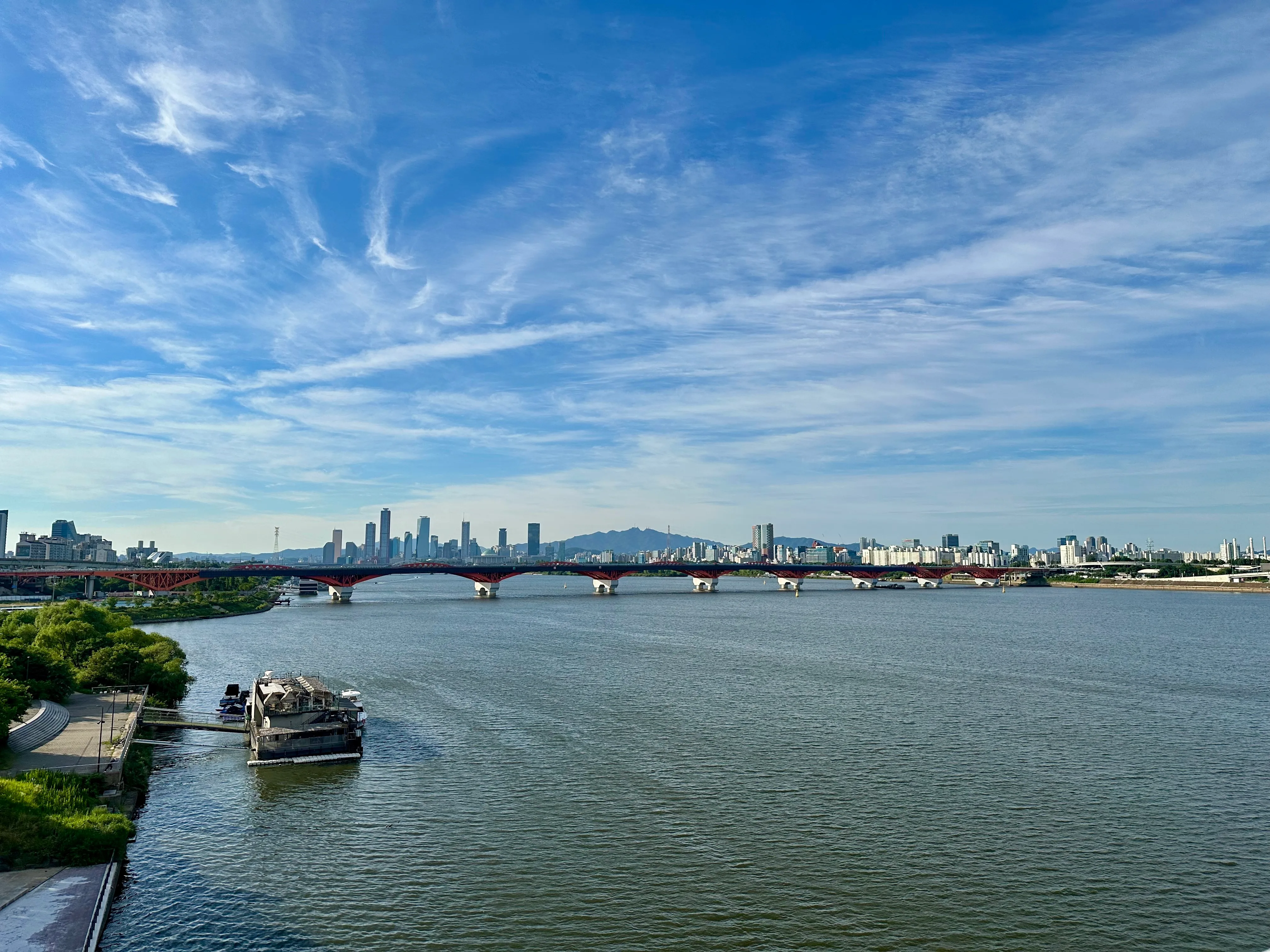
My home-ground route. Start in the city, jump into complete greenery, cross two bridges and end up on a hidden island park most Seoulites have never visited.
- Distance
- 12.1 km
- Elevation
- 118 m
- Difficulty
- Easy
That +118 m is almost entirely bridge approaches: Gayang-daegyo, the Seonyu footbridge onto Seonyudo, and Yanghwa-daegyo. The Seonyudo crossing and Yanghwa-daegyo both have elevators, so you can skip the stairs there. There are no real hills: the rest is flat riverside path.
How it runs ↓Course map
The route, on the actual map.
GPS-recorded track with points of interest along the way. Click any marker for the local context: water, toilets, CV stores, bridge crossings, photo spots.
Tap a pin with a play badge to see a short clip from the run.
- Distance
- —
- Elevation gain
- —
- High / low
- —
Loading map…
Hover the route or the elevation chart
- Distance
- —
- Elevation
- —
- Grade
- —
Other distances
The default 12 km loop: Hapjeong → west through Mangwon → Gayang-daegyo crossing → east along the south bank → Seonyudo Park → Yanghwa-daegyo → back. The full character of the route at a sane distance.
Also showing:
Restrooms, water fountains, and convenience stores near the route come from official Korean public open data (Seoul Open Data Plaza and data.go.kr). Hours can change, so treat them as a guide.
12.1 km+118 mEasy
How it runs
The route, part by part.
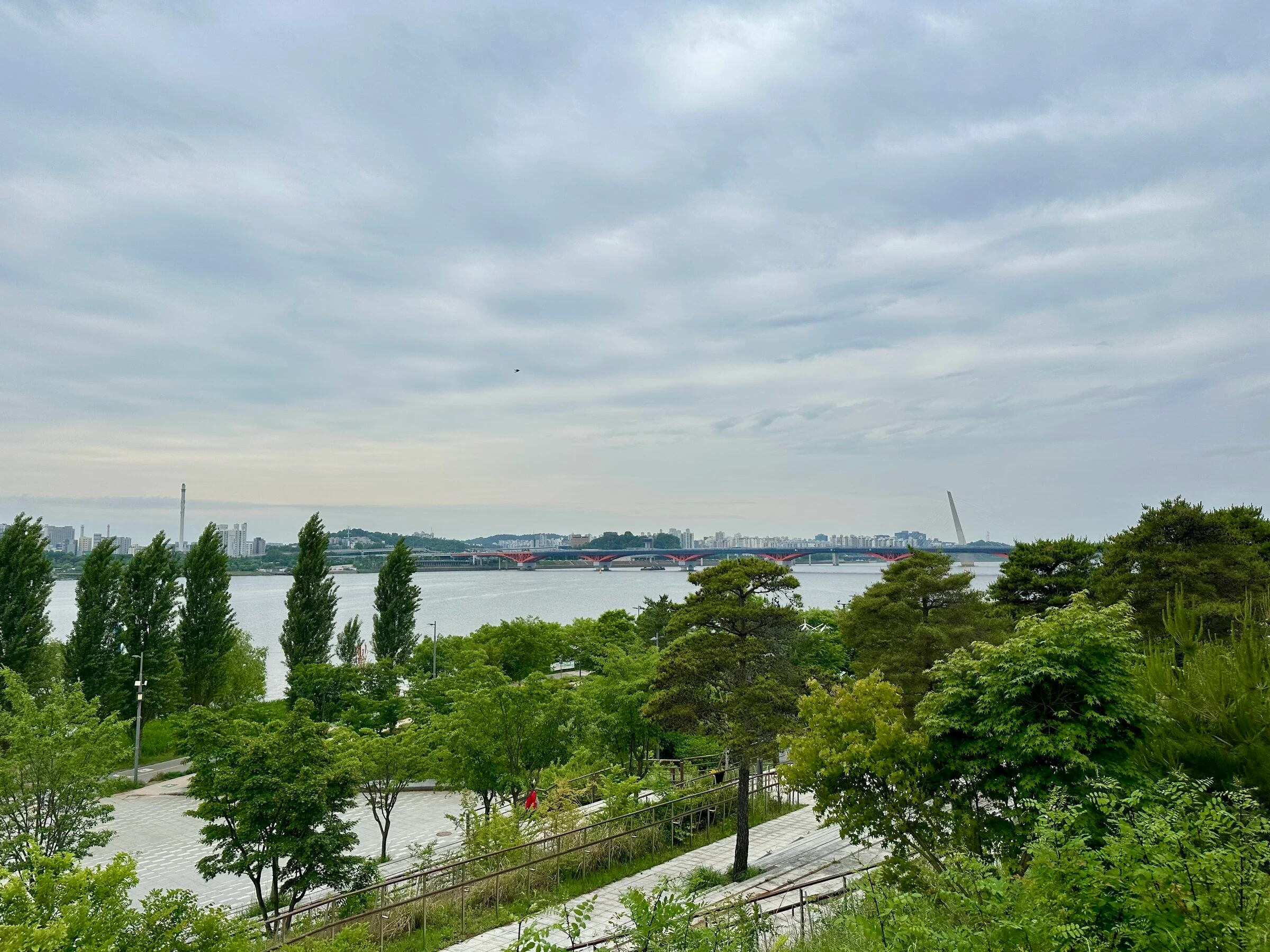
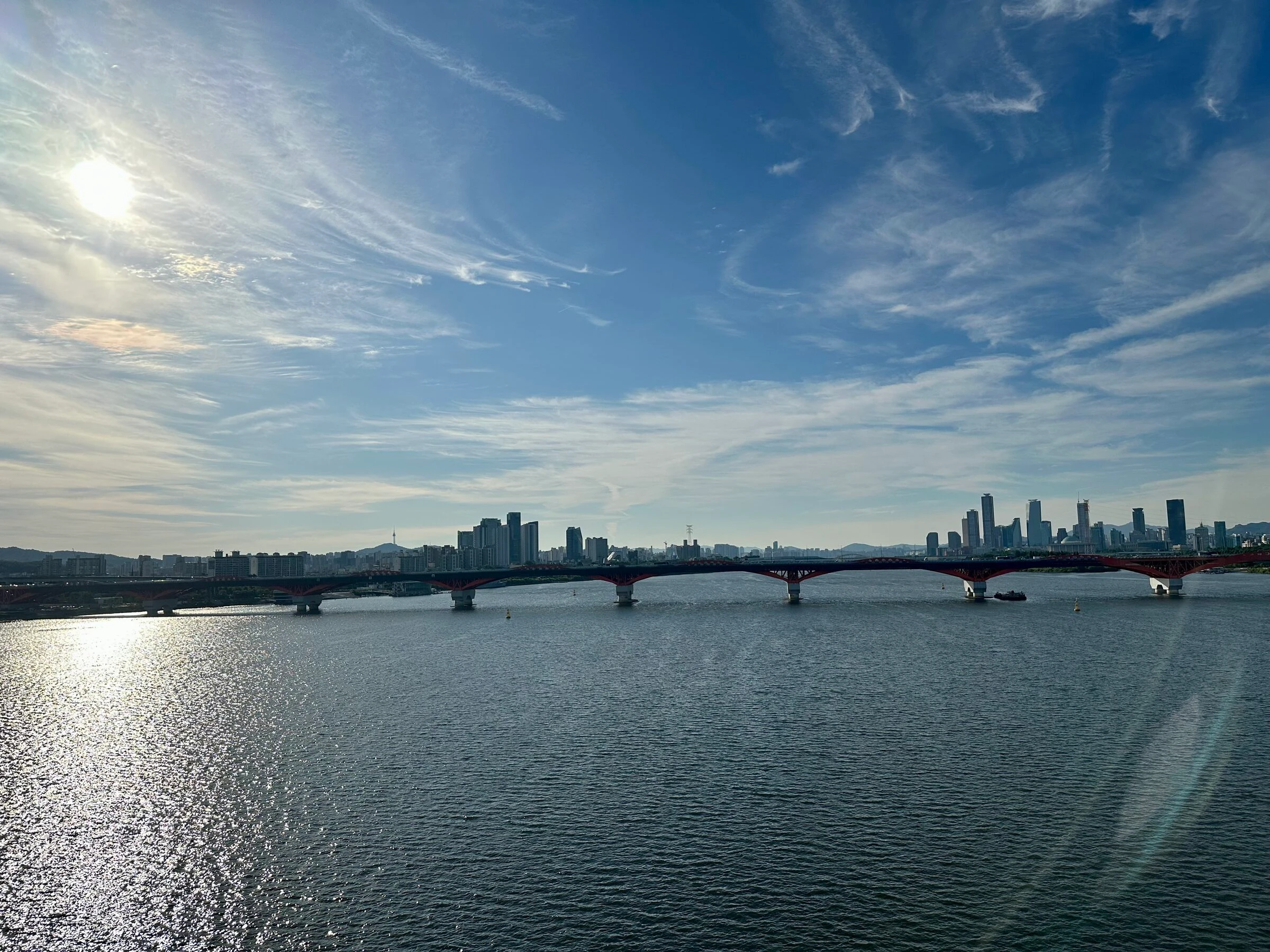
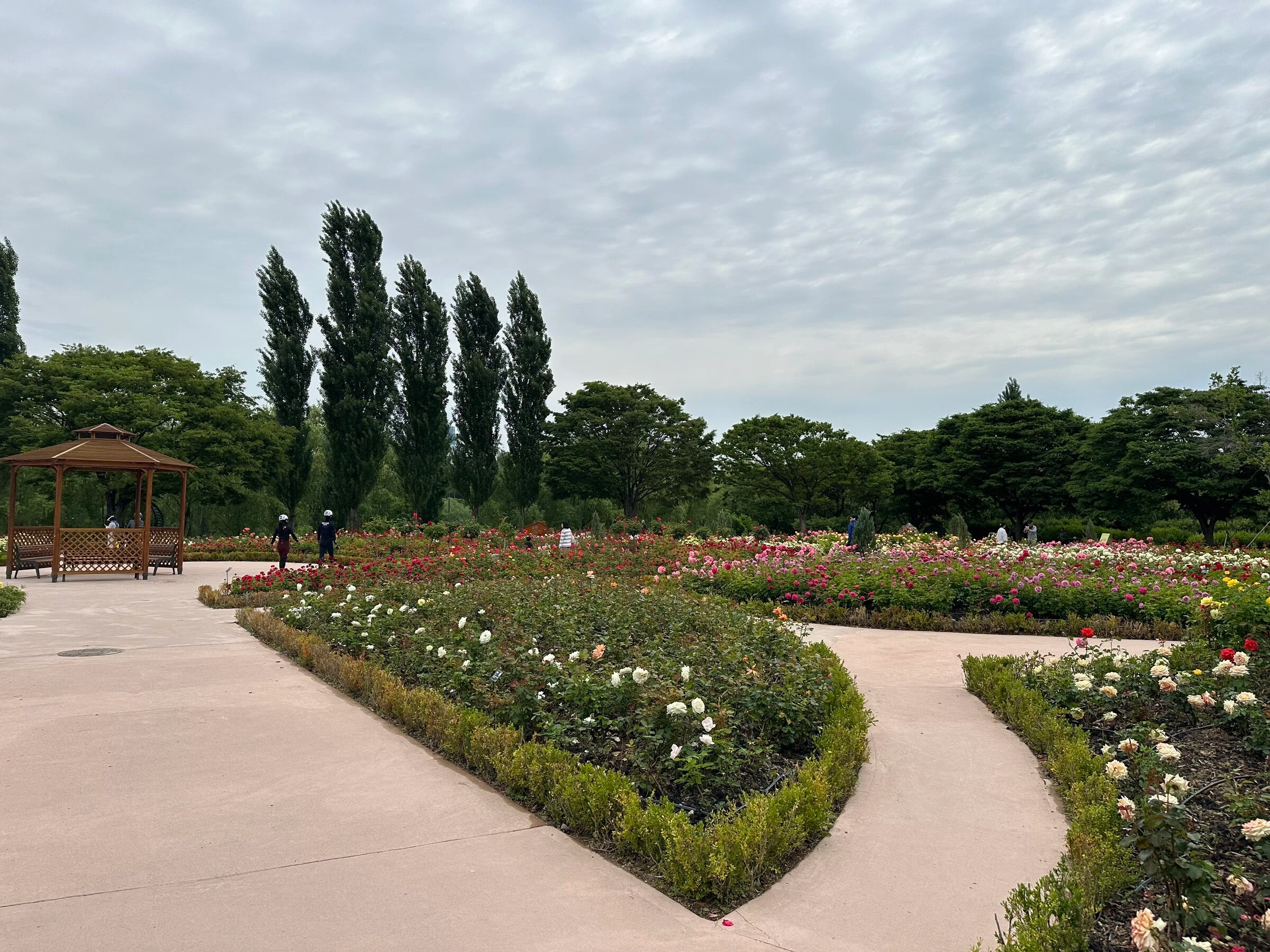
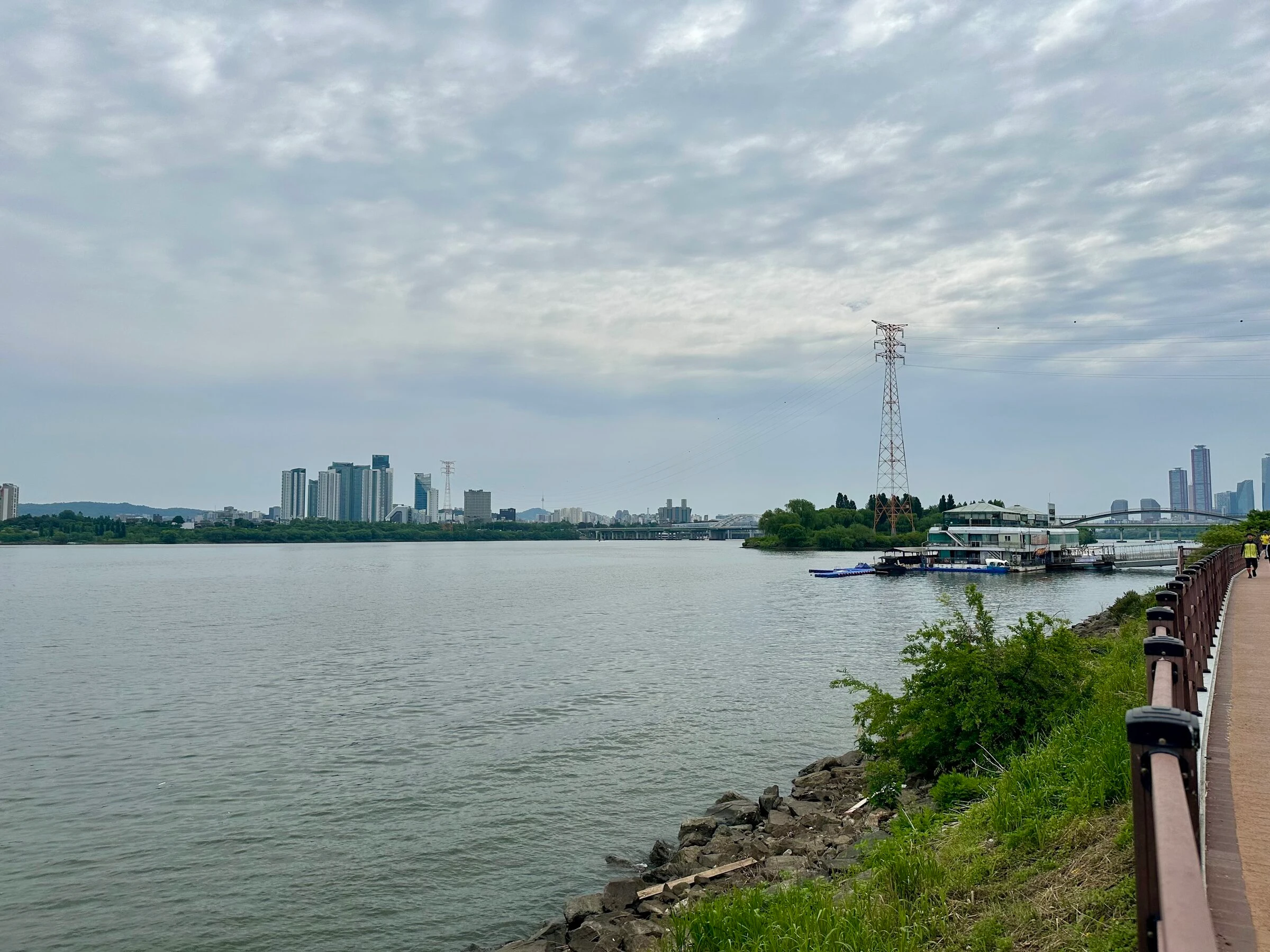
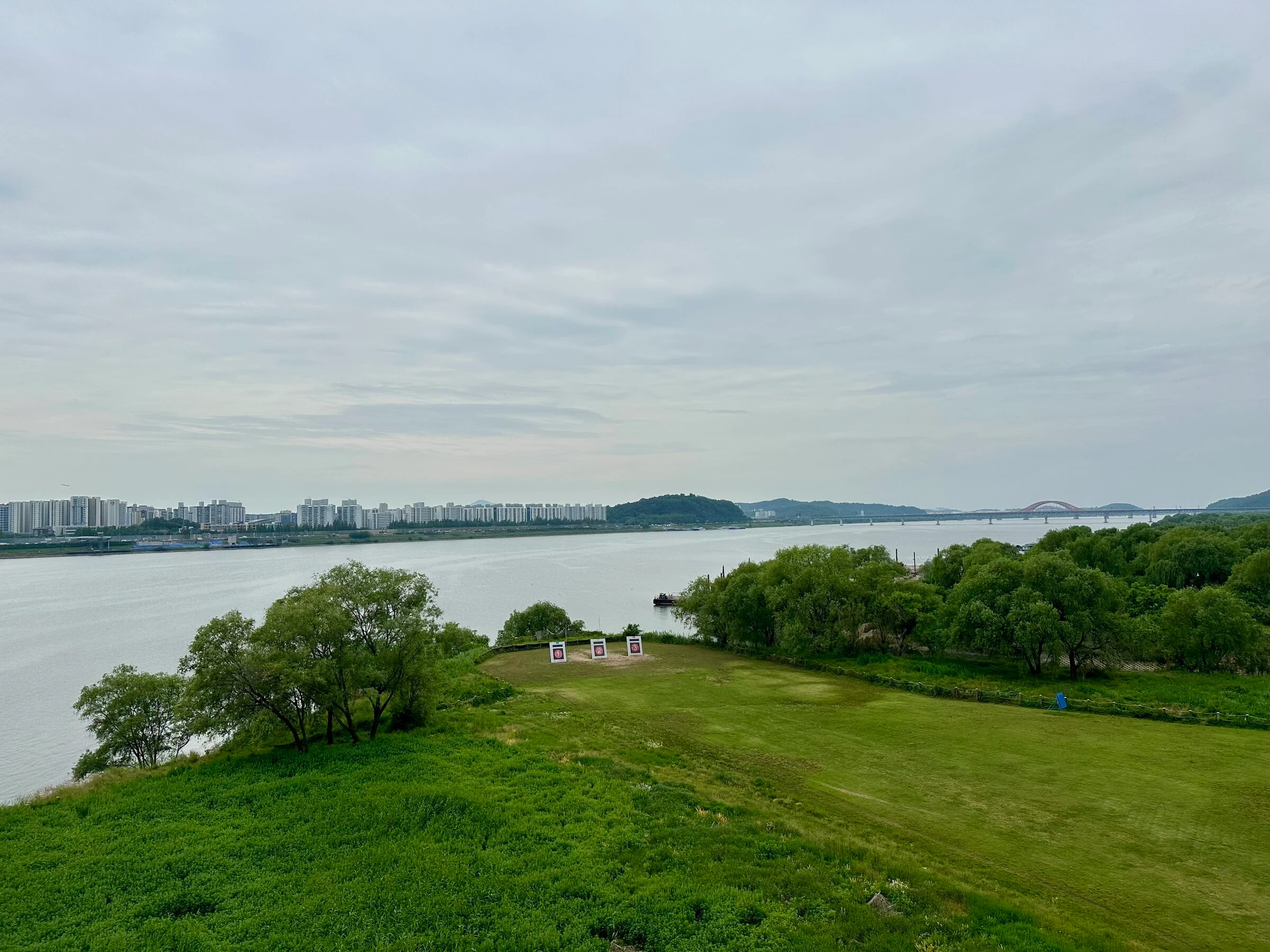
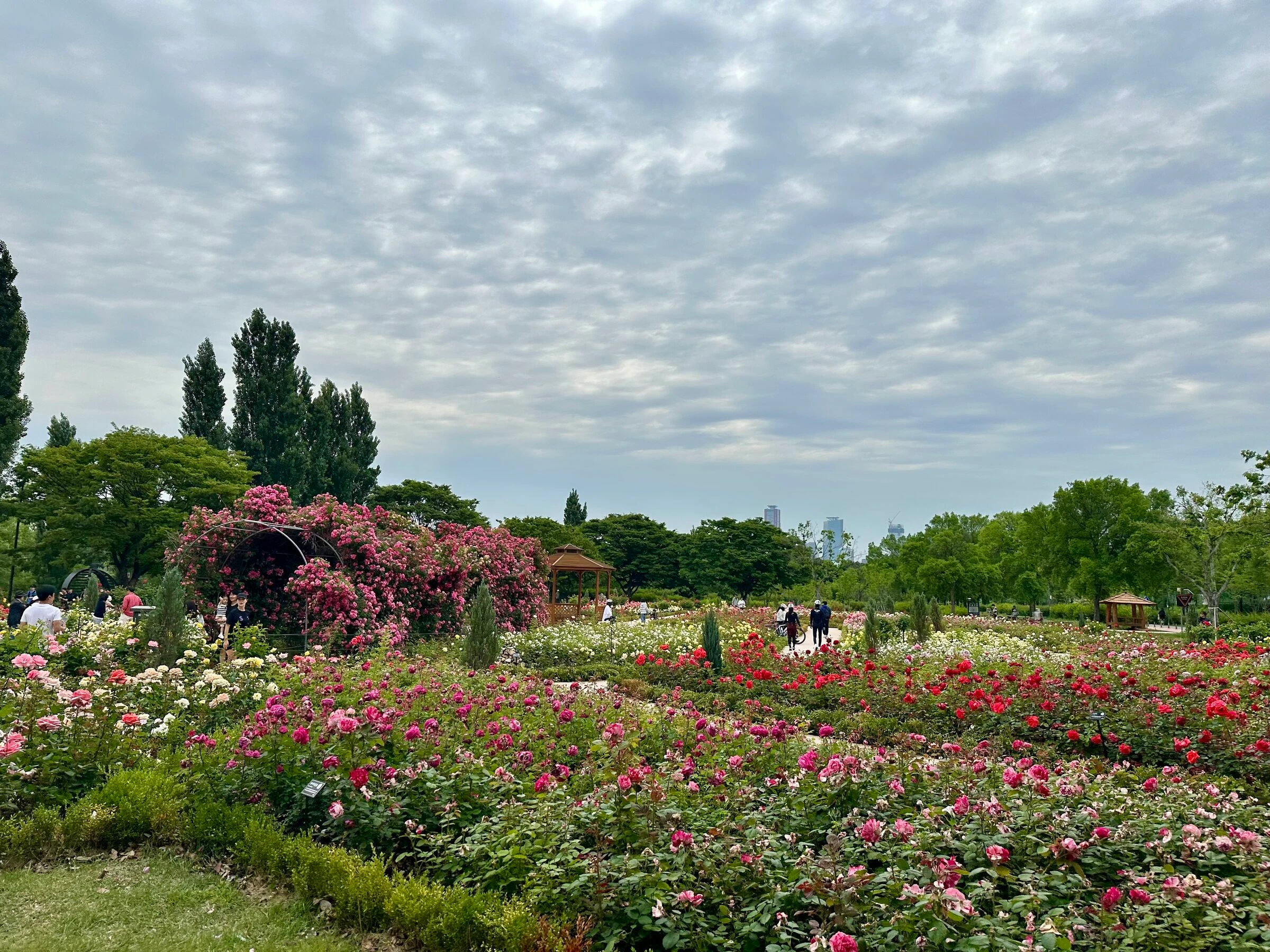
My home ground, the route I run more than any other. You start in the city, then within about ten minutes jump into wide, easy greenery that is rarely busy even at peak season. Cross two great bridges, see both edges of the river, and end up on Seonyudo Park, an old water-filtration plant the city turned into an ecological island. It sits in the middle of a road bridge, so most Seoulites never realize it is there. The rose garden alone is worth the run.
Run the main 12 km loop, or pick a variant: 17 km via Mapo, a tighter 16 km Yeouido focus, a 27 km Sangam long for marathon weeks, or the Hangang Bus version, ride out to Yeouido and run back. Same start, same POIs.
- 01
Hapjeong start, drop down to the river
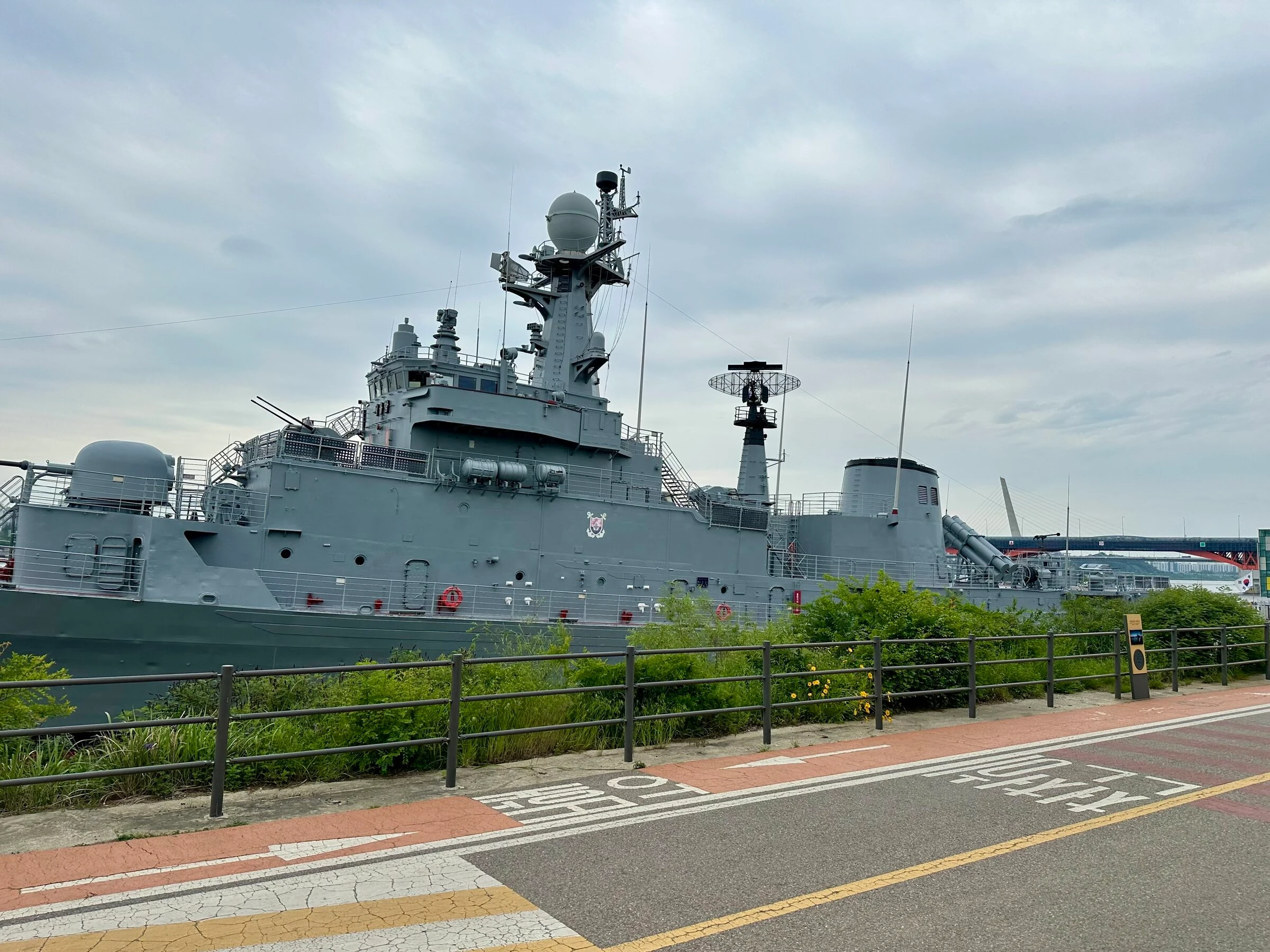
We meet at Hapjeong Station Exit 8 and walk about ten minutes to the river at Yanghwa-daegyo, where the loop starts. From there the path heads west through the underpass beside the preserved ROK Navy ship and into Mangwon Hangang Park.
- 02
West along the north bank
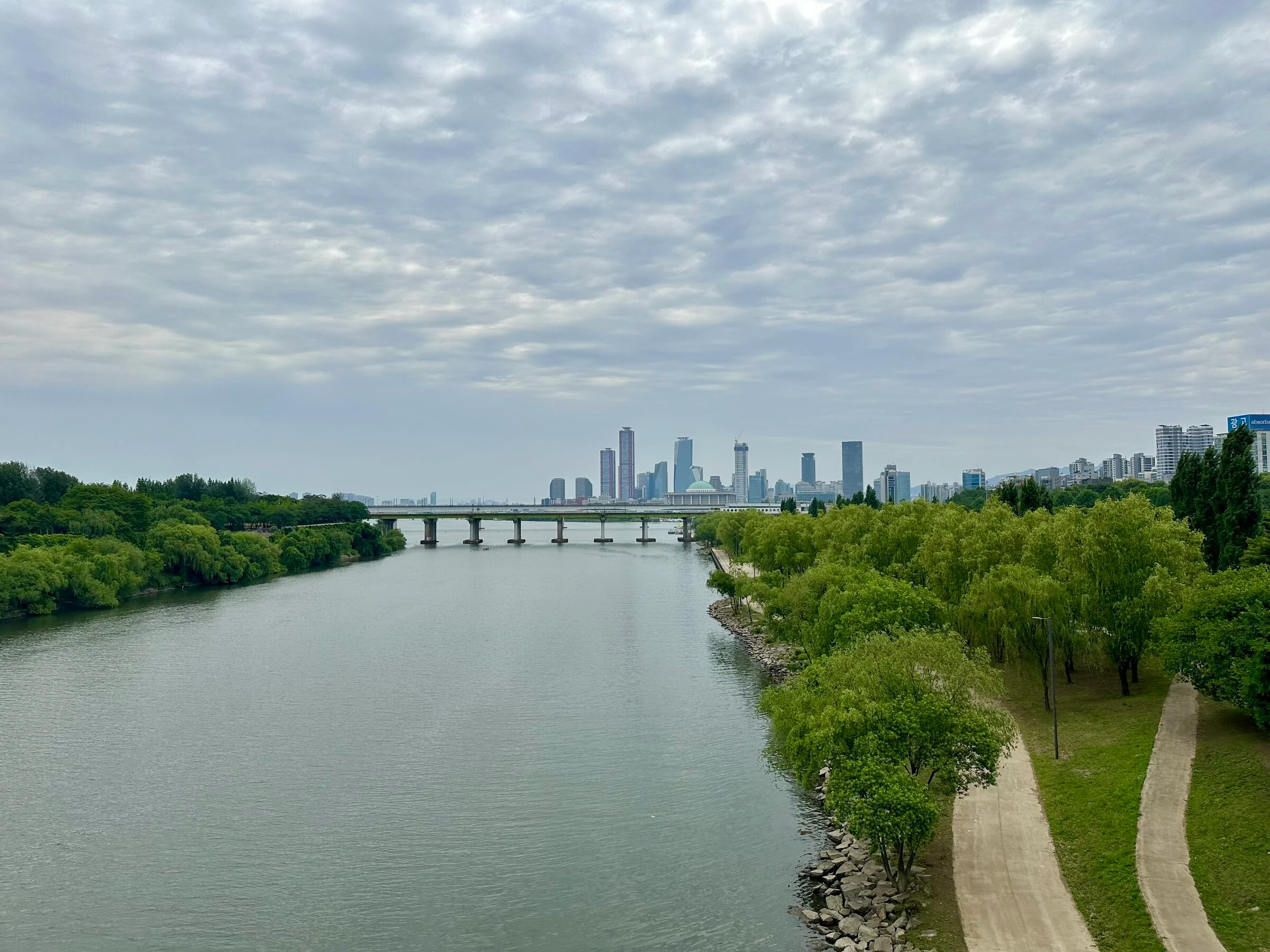
About four and a half kilometers of flat, paved, mostly car-free running past Mangwon and on through Nanji, river on the left and dense foliage on the right, amenities every kilometer or two. The stretch that does not feel like Seoul any more, rarely crowded even on a peak-season weekend.
- 03
Cross Gayang-daegyo to the south bank
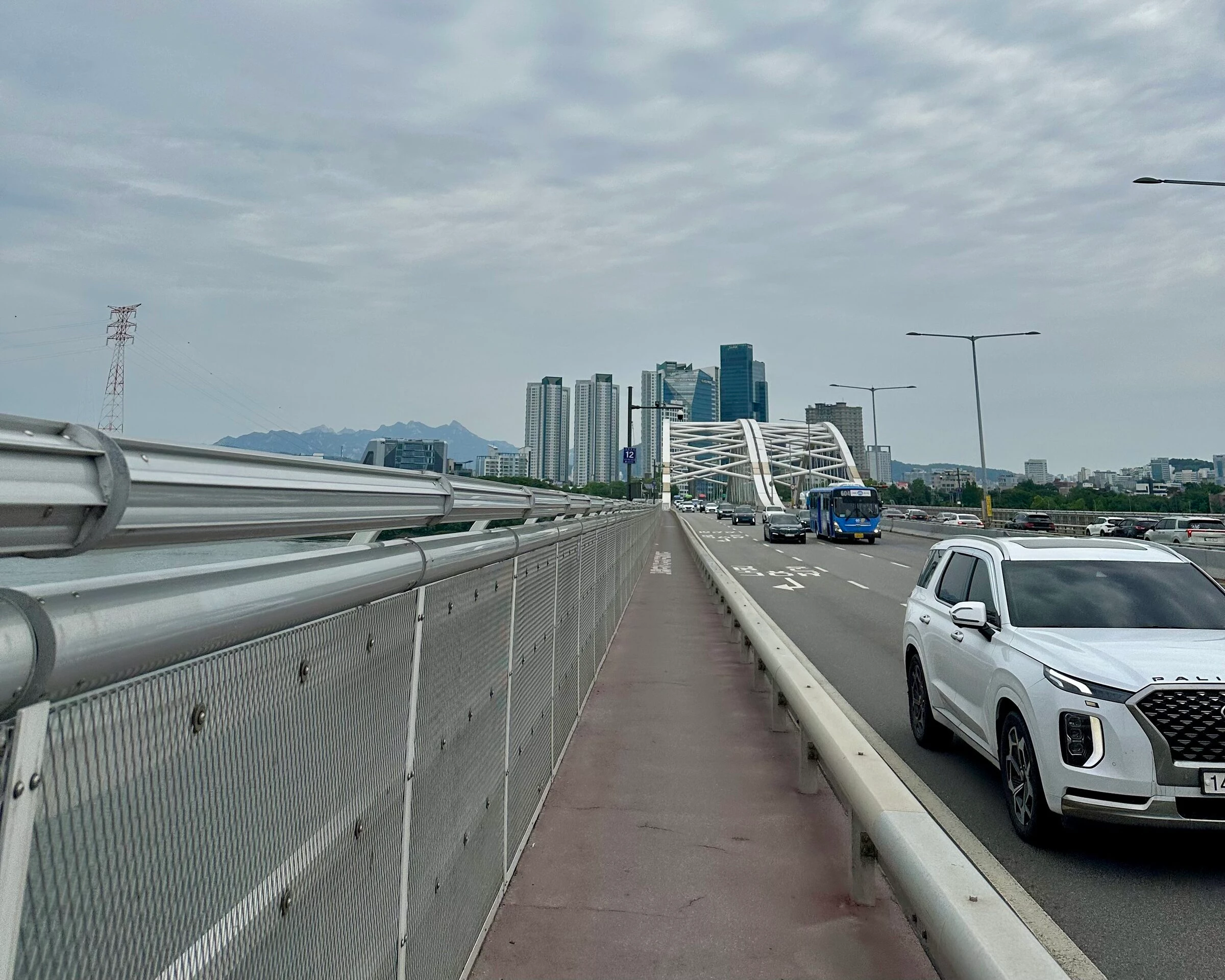
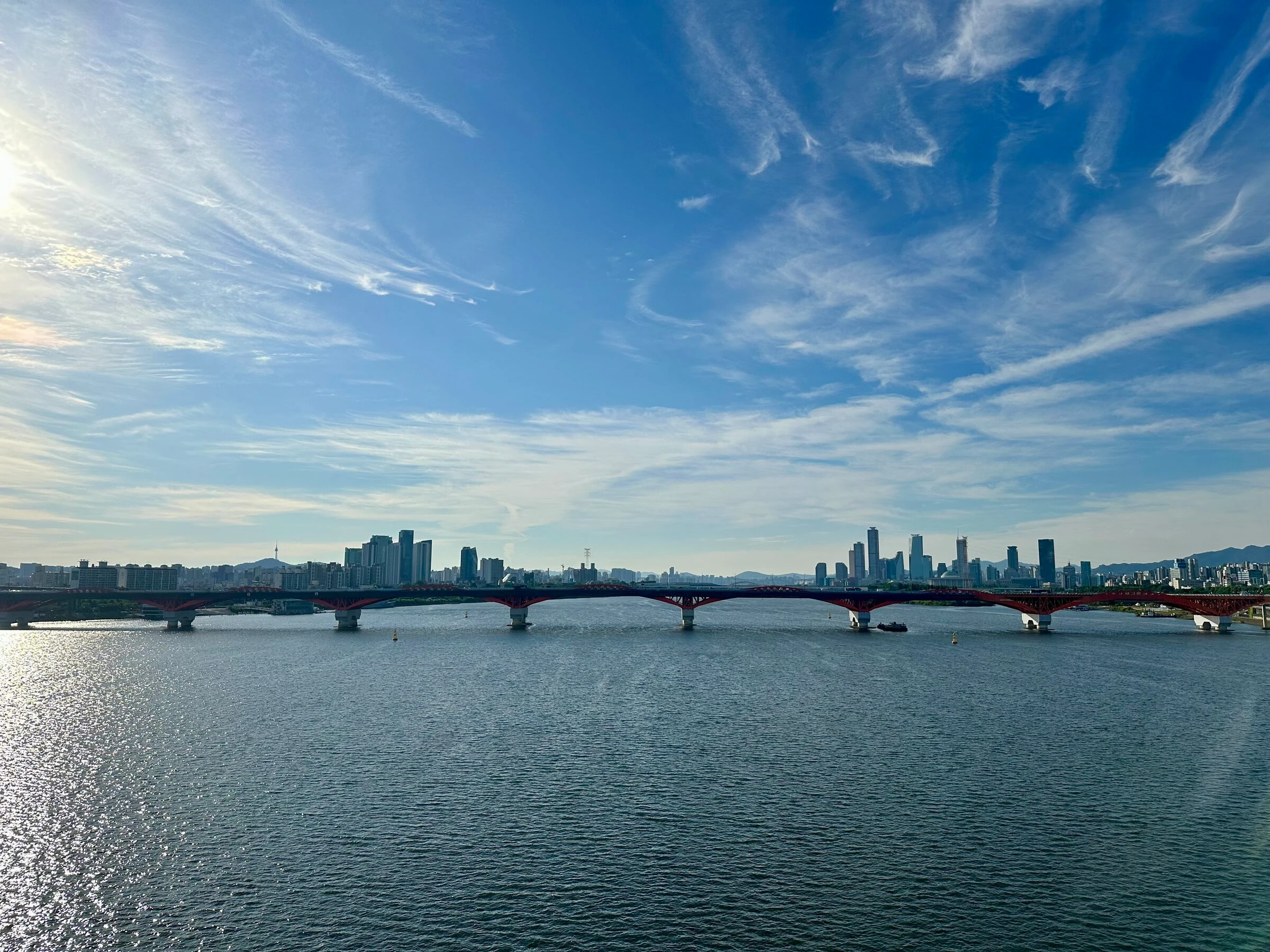
At about 4.5 km the path climbs onto Gayang-daegyo and crosses the river on the walkway, with wide views up and down the Han. You come down on the south bank just before 6 km.
- 04
East along the south bank
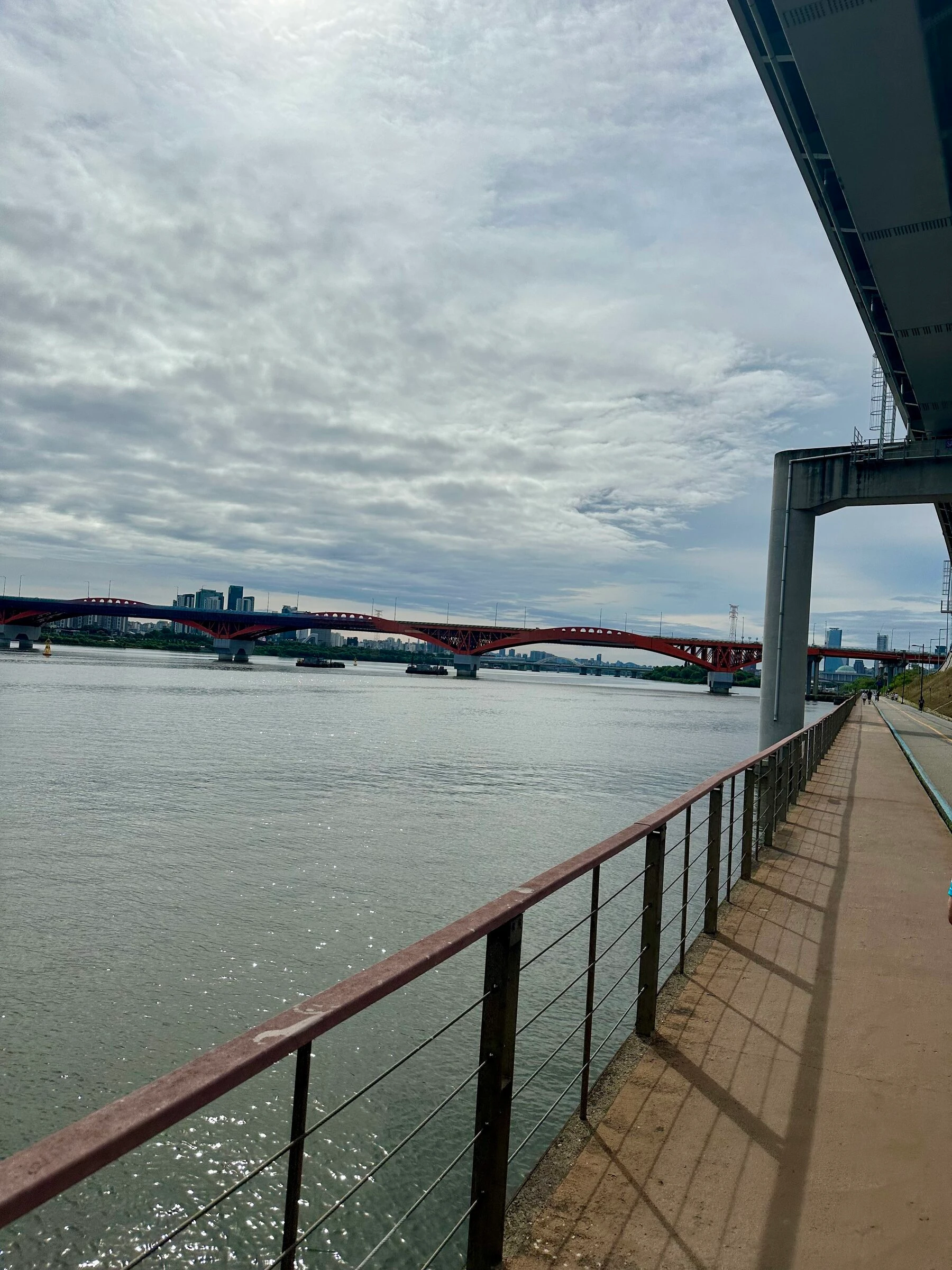
About four kilometers east on the south-bank path, past the Anyangcheon confluence and through Yanghwa Han River Park, with the north bank you just ran across the water.
- 05
Seonyudo Park, the island in the river
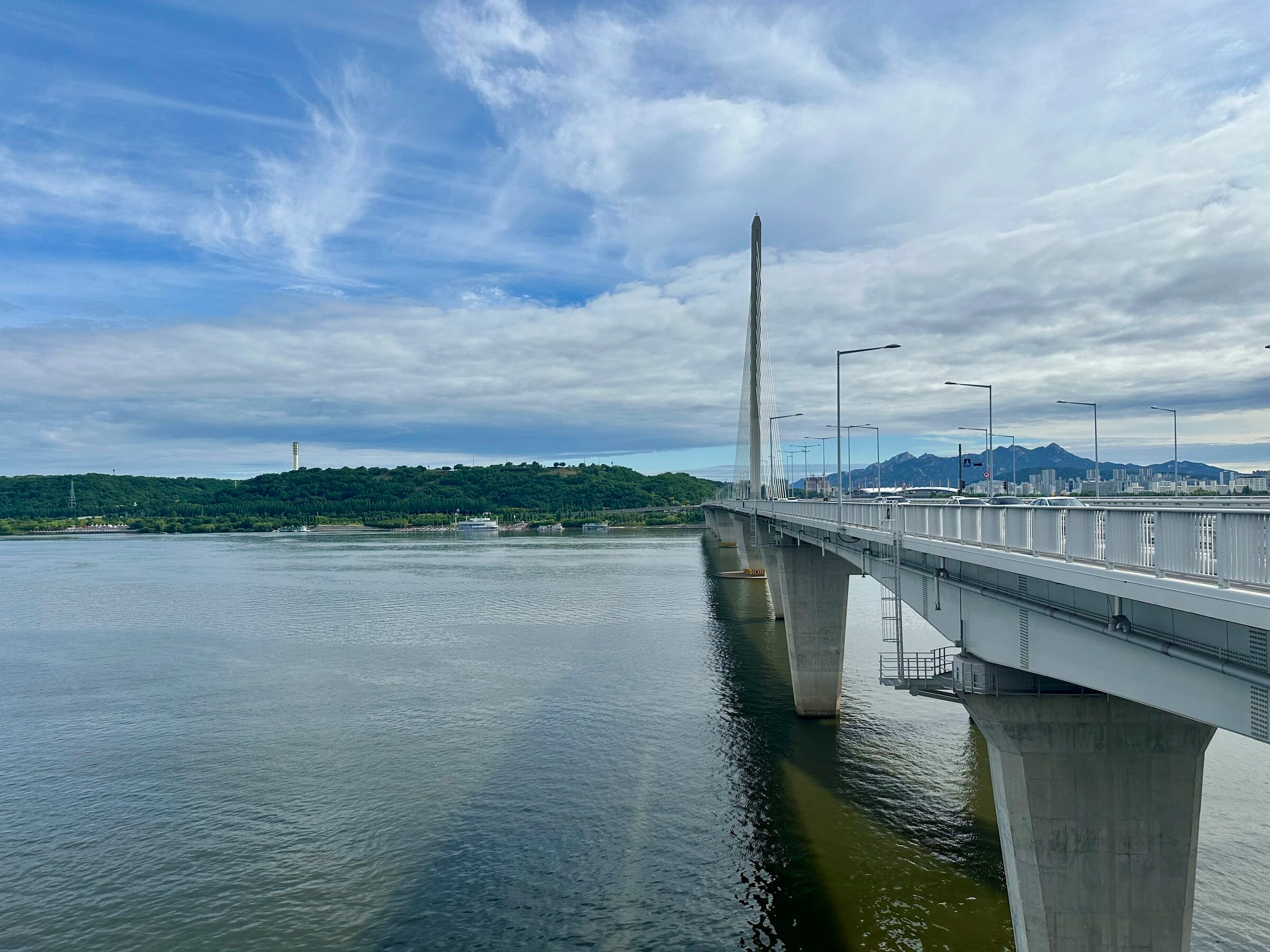
At about 10 km the Seonyu footbridge lifts you onto Seonyudo: rose garden, gazebos, interpretive trails through industrial ruins, views back across the river.
- 06
Over Yanghwa-daegyo, back to Hapjeong
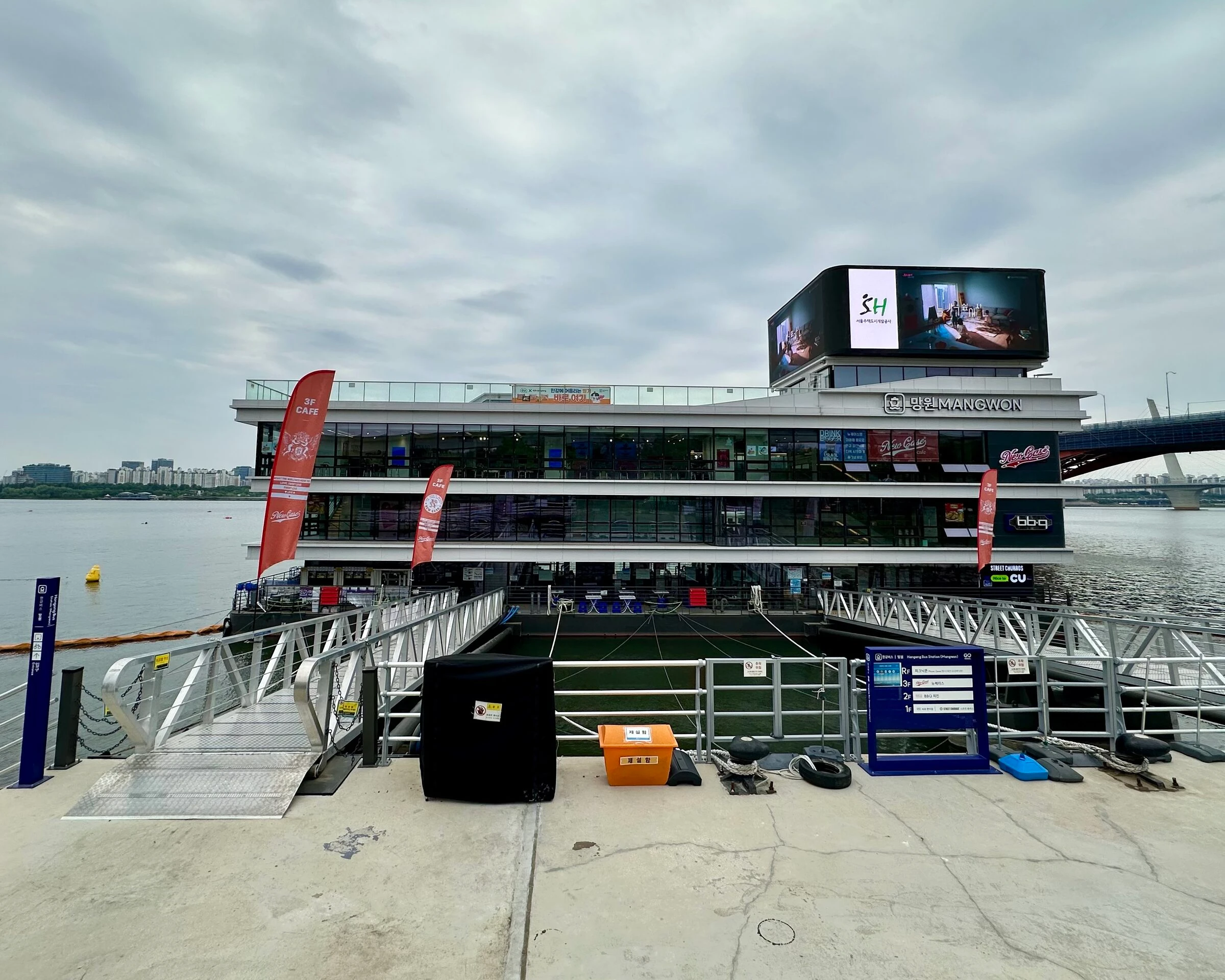
From the island, up onto Yanghwa-daegyo and north across the pedestrian deck, skyline opening on both sides. Down on the north bank, about half a kilometer west closes the 12 km loop. The Mangwon cafes are a few minutes’ walk from there.
Ran this route
What runners said about this one.
Sevinc U.
Ran 28 July 2026
One of the highlights of my trip to Seoul. Quintine was an outstanding host, making the experience enjoyable from start to finish. Great route and a perfect way to discover the city while running. I highly recommend it!
만찐두빵
Ran 23 August 2026
It was an amazing experience! If you love running and are visiting or planning a trip to Seoul, I highly recommend exploring the city with Quintin. Running through Seoul with him made my trip even more special and gave me a whole new perspective on the city.
Facts
Numbers, surfaces, fountains, toilets.
The things you actually want to know before you head out.
- Default distance
- 12.1 km (main loop)
- Variants
- 12.1 / 14.0 / 16.1 / 17.2 / 27.2 km, plus a 12.8 km Hangang Bus version
- Elevation gain
- +118 m (main), mostly bridge approaches: Gayang-daegyo, the Seonyu footbridge and Yanghwa-daegyo. The Seonyudo crossing and Yanghwa-daegyo both have elevators to skip the stairs.
- Surface
- Paved path plus bridge deck
- Traffic exposure
- None on the river path; bridge decks separated from road traffic
- Shade
- Decent along the north bank, exposed on the bridge decks, on-and-off the rest.
- Water fountains
- Hapjeong, Mangwon (multiple), Sangam, Nanji, the Anyangcheon confluence, Yanghwa Han River Park, Seonyudo, Yeouido (longer variants)
- Toilets
- Hapjeong, Mangwon (multiple), Sangam, Nanji (multiple), the Anyangcheon confluence, Yanghwa Han River Park, Seonyudo, Yeouido (longer variants)
- Convenience stores
- Mangwon (cluster with Starbucks), Sangam, Nanji, the Seonyu Bridge south landing, Yeouido (longer variants)
- Transit
- Hapjeong Station Exit 8 (Lines 2 and 6), about a 10-minute walk to the start and finish
When to run it
Best time, best season, the honest caveats.
Best time of day
Early morning before 8am has the river path almost to itself. Late afternoon into evening is the second-best window, when the open stretch toward Sangam catches a long golden hour in spring and autumn.
Best seasons
Spring (April–June) for the rose garden in bloom and cool mornings; autumn (September–November) for the cleanest air and longest comfortable run windows.
Caveats and Plan B
- Summer midday on the open river path is hot, shade only in pockets. June through August, run early or late.
- The Yanghwa-daegyo pedestrian deck is shared with cyclists and busy on good-weather weekend afternoons. Stay right.
- The Sangam long variant goes out to Jamsu-gyo and comes home down the south bank, so the back half feels long. Eat before, not during.
From me
I trained for my last marathon here, run it at 5 a.m. and 9 p.m., through monsoon rain and frozen January mornings. It is the first place I take anyone who has run the Han River and wants something better. One of my favorites, because it has nothing to prove.
· Quintin
Where we start
Hapjeong Station Exit 8 (Lines 2 and 6), then the river at Yanghwa-daegyo
Subway Lines 2 and 6, Hapjeong. From Exit 8 it is about a 10-minute walk to the river at Yanghwa-daegyo, where the loop starts and finishes. The pedestrian underpass beside the preserved navy ship then takes you into Mangwon Hangang Park.
FAQ
Quick answers.
Which variant should I pick?
First time, take the classic 12 km: city → forest → bridges → Seonyudo. The 17 km Mapo extension and 16 km Yeouido focus are both popular, the 27 km Sangam long is for marathon weeks, and the Hangang Bus version is softer: ferry out, run back.
How busy is it really?
The Hapjeong-to-Mangwon-to-Yanghwa stretch is one of the quietest parts of the Han path even in peak season. Seonyudo gets busier on spring and autumn weekend afternoons, but rarely enough to slow a run.
Can I do this without crossing any bridges?
Mostly no: the loop relies on bridge crossings between banks. The Hangang Bus variant trades the first crossing for a ferry leg.
What if it is wet?
Light rain is fine: the paths are paved and the trees give cover on the western stretch. In heavier rain we shorten to the 12 km loop or pivot to another route.
More Seoul routes
Where to run next.
Namsan Mountain
The hill road Korean runners come to Namsan for. A 3.5 km foot-traffic-only hill road of ups and downs under a closed tree canopy, run out and back, with the option to keep climbing to N Seoul Tower for the view.
- 7 km
- Moderate
- ~55 min hill loop
Seoul City Wall Trail
The big one. The full 20 km loop of the old Seoul City Wall, over four mountains and past the great gates, the Blue House, DDP and N Seoul Tower. The most popular route in Seoul, and the real challenge is running all of it in one go.
- 20 km
- Hard
- ~3:00 running the full loop, longer with stops and a few wrong turns
Yeouido Goguma Loop
A flat lap of Yeouido island, named for the goguma (sweet potato) it draws on the map. Forested river paths, the 63 Building in gold, and the best-equipped runner hub in Seoul to start from.
- 8.6 km
- Easy
- ~50 min main loop