서울 러닝 · a local runner’s field guide
Running in Seoul is its own sport.
A river that never ends, neighborhood races with thousands on the start line, crews that finish every session with fried chicken, and the best-dressed start lines in the world. I have run and raced this city for ten years. Here is how it works.
Running in Seoul starts with the Han River
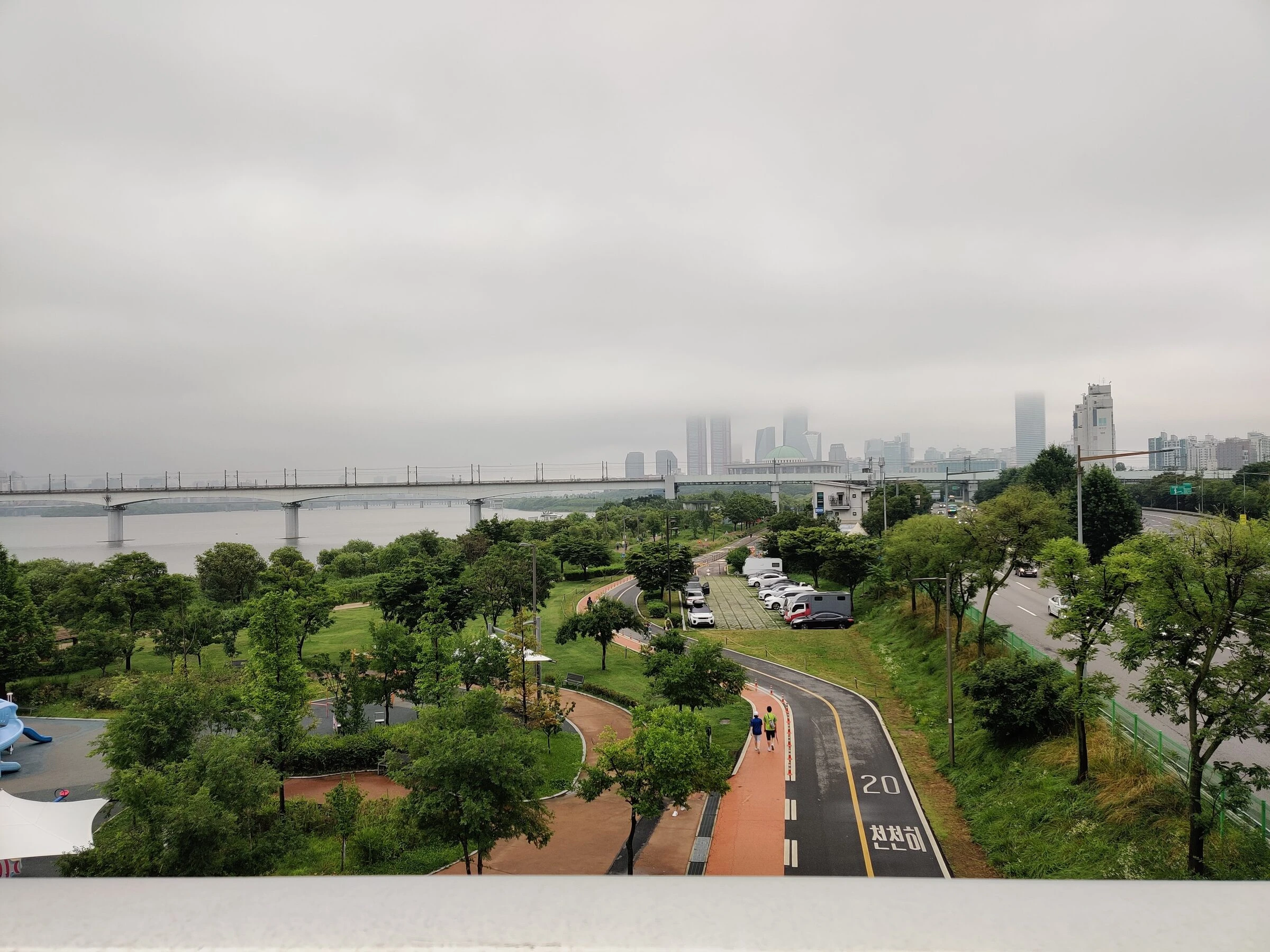
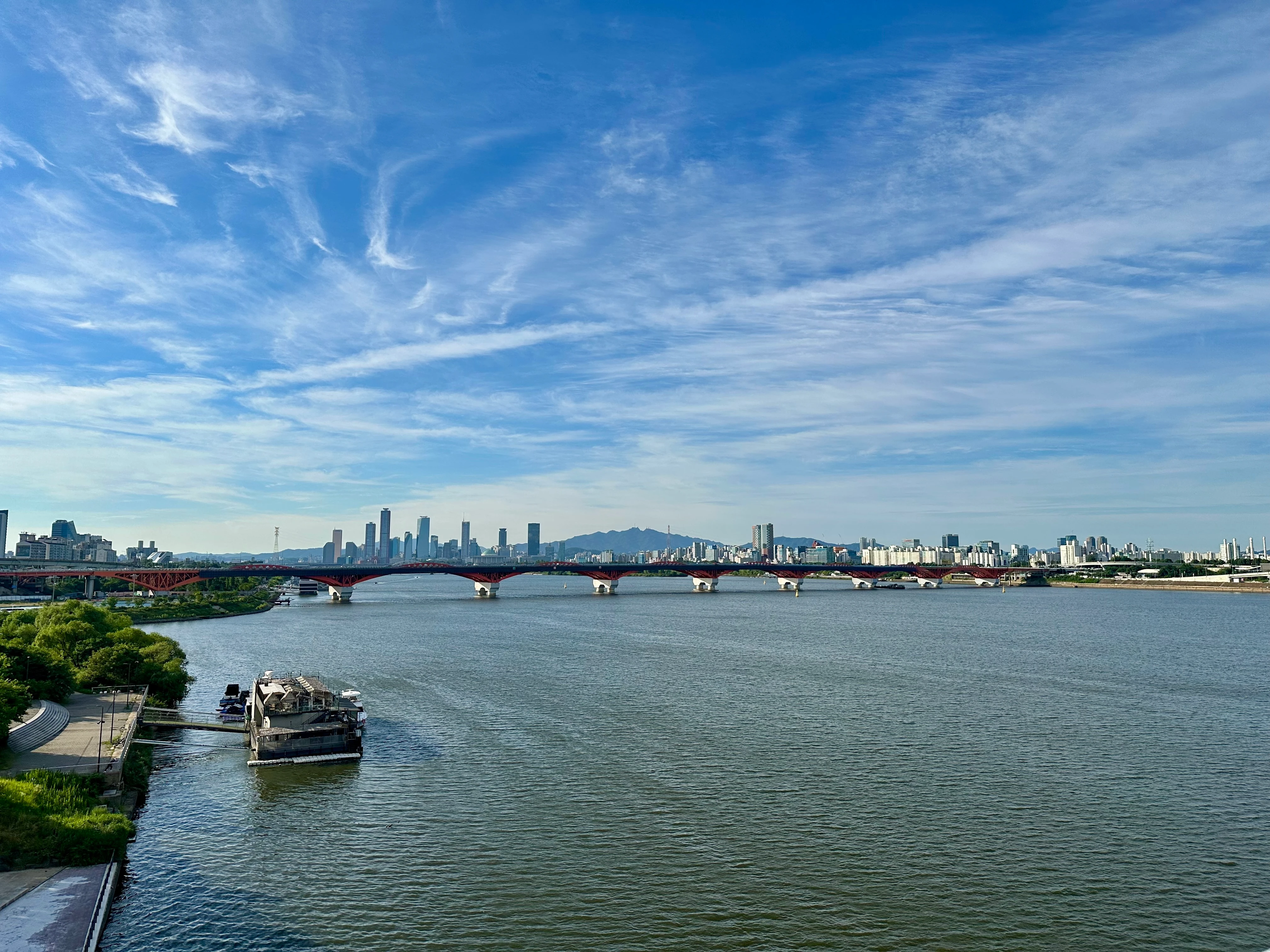
Most cities have a running spot. Seoul has a spine. The Han cuts the city clean in half, and both banks carry paved, car-free paths for the entire crossing. Count the tributary streams that branch into the neighborhoods and you have more than 100 kilometers of protected running without a single traffic light. Restrooms and water fountains appear roughly every two kilometers. Convenience stores sit directly on the path. You can run 30 kilometers here carrying nothing but a transit card.
Run it enough mornings and the river starts introducing you to its regulars. There is a man who practices his saxophone in an alcove so the sound carries over the water. A couple swing dances by the bridge every evening. At six in the morning near my house, a group of grandmothers and grandfathers hold their meditation session in the middle of a basketball court. Rain, snow, heatwave: they show up. So do the runners.
And if the river ever feels too familiar, follow any stream inland. Twenty minutes off the main path you can be on a wooded trail that feels like countryside, still inside Seoul.
100+ km car-free paths · water + restrooms every ~2 km · stores on the path · lit after dark
Where to run in Seoul
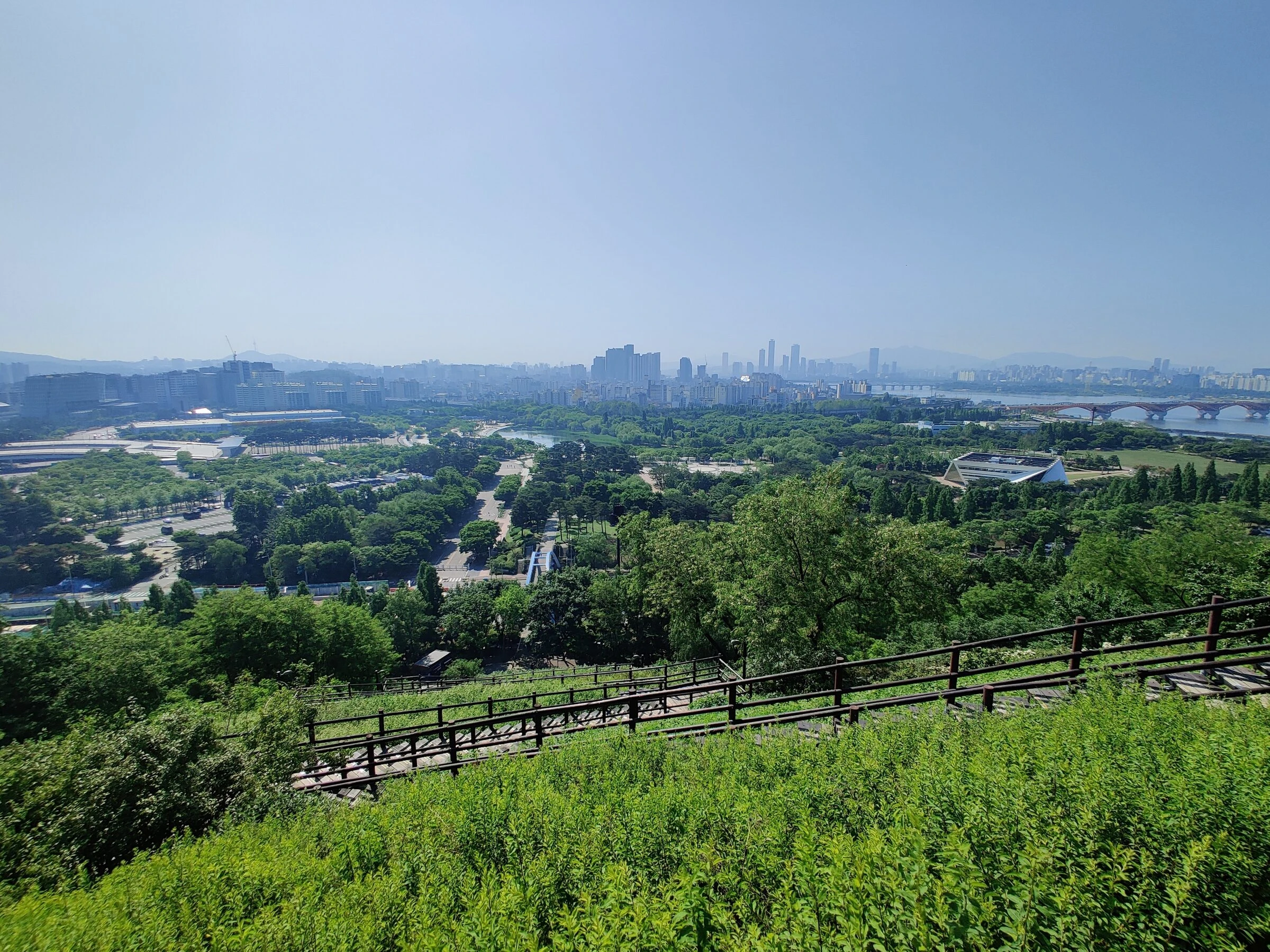
The best places to run in Seoul cover the city’s full range: riverside miles, a proper hill, a mountain fortress loop, and downtown palaces. Each of these five is mapped in detail, down to every restroom and water fountain.
- 0112.1 km
Han River west: Mangwon to Seonyudo
The signature riverside run. Flat, car-free, skyline across the water, and a garden island halfway if you want a detour.
- 028.6 km
Yeouido loop
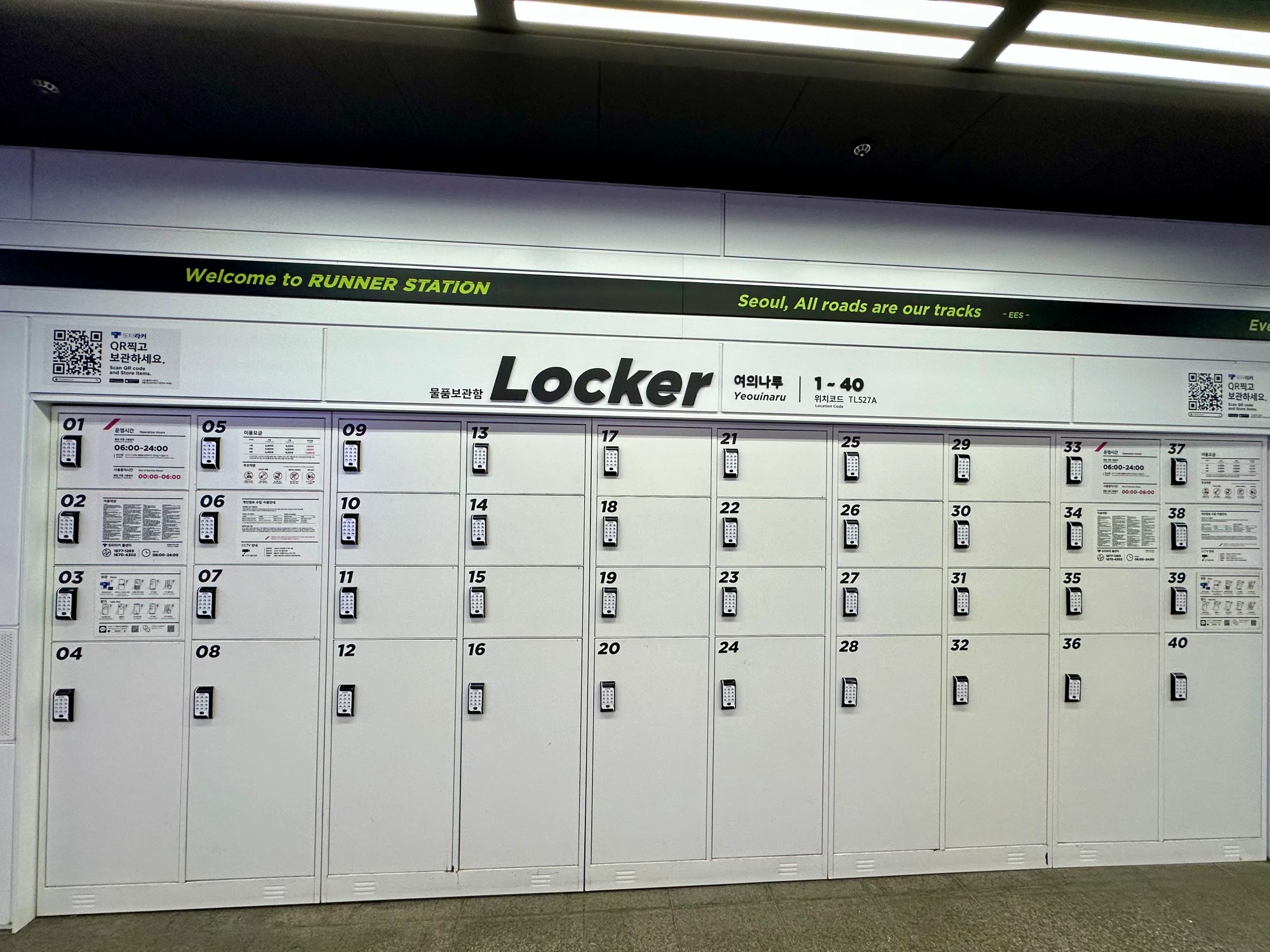
Seoul’s track-day island. Flat loops, the National Assembly dome, and the Running Station, free to enter, with changing rooms and paid lockers.
- 037.0 km
Namsan
The hill session. Rolling climbs on a foot-traffic-only road under tree cover, with an optional push up to the tower for the view on every visitor’s camera roll.
- 0420.0 km
Seoul City Wall trail
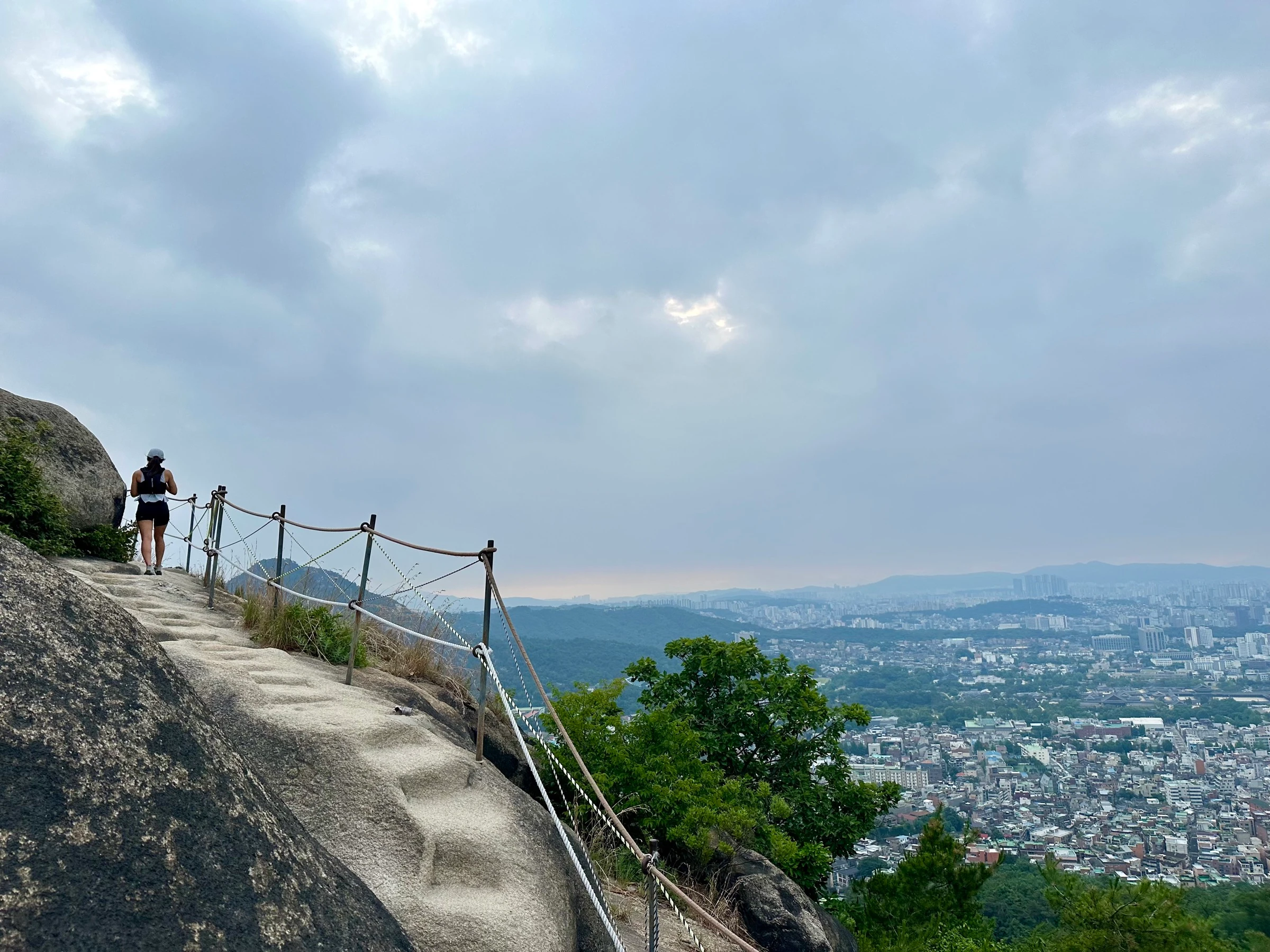
A loop of the 600-year-old fortress wall over four mountains. The hardest and most historic long run in the city.
- 058.3 km
The Puppy Run, downtown
Palaces, the Blue House, and Cheonggyecheon stream, on a route that draws a dog on your GPS map.
The east side runs just as well: Ttukseom and Jamsil carry the same river infrastructure, Seoul Forest adds shaded gravel, and Olympic Park has a rolling perimeter locals use for tempo work. Prefer mountains? Bukhansan National Park is 30 minutes away by subway, and its Dulle-gil perimeter trail alone runs 71 km. Our routes hub also draws a density map from the running routes Seoul runners saved to their watches, so you can see where the city actually runs. See every route, with maps and facilities.
A 37-minute 10k, and the podium was gone before the second kilometer.
Seoul runners are fast
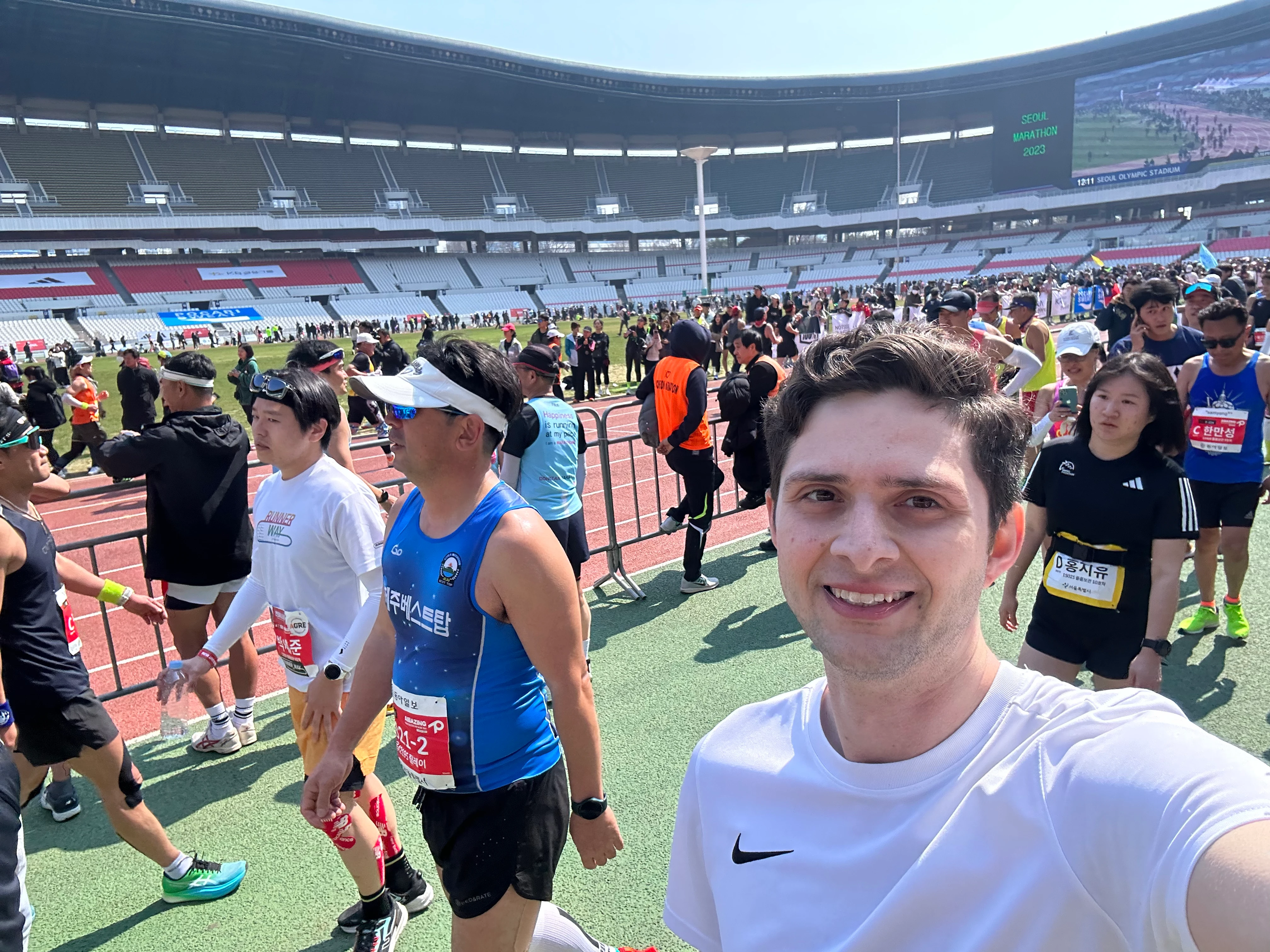
I mean that literally. A few springs ago I lined up at a small neighborhood charity race, the kind of event that would draw forty people in most countries. It turned out thousands deep, with pace groups and a proper start corral, and a front pack I never saw again after the gun. That is a normal Saturday here.
The depth is measurable. Korean sports pages counted roughly 300 sub-3-hour marathoners nationwide five years ago; last year the count passed 1,500, and the November JTBC Seoul Marathon alone produced 671 sub-3 finishes, up 50 percent on the year before.
The Seoul Marathon each March is Asia’s oldest, first run in 1931, and 2026 was its biggest year yet. It placed 4th in the World Athletics competition rankings for the first half of the year, behind only London, Tokyo, and Boston, and its result score, the part graded on the times actually run, edged out Boston’s. The course record fell to 2:04:22, the organizers counted 6,424 overseas entrants, up 70 percent in a year, and the amateur field produced a world record of its own: 70-year-old Shin Haeng-cheol ran 2:54:18, now certified by World Masters Athletics as the M70-74 marathon world record.
All that speed comes with almost none of the ego. The runners who bury you in a race will wait at the finish to cheer you in, swap pace plans, and add you to the group chat, whether you are chasing sub-3 or finishing your first 5k.
- 4thWorld Athletics ranking, first half of 2026
- 2:04:22course record, set 2026
- 671sub-3 finishers at JTBC Seoul, up 50% in a year
- 2:54:18M70-74 world record, set at Seoul 2026
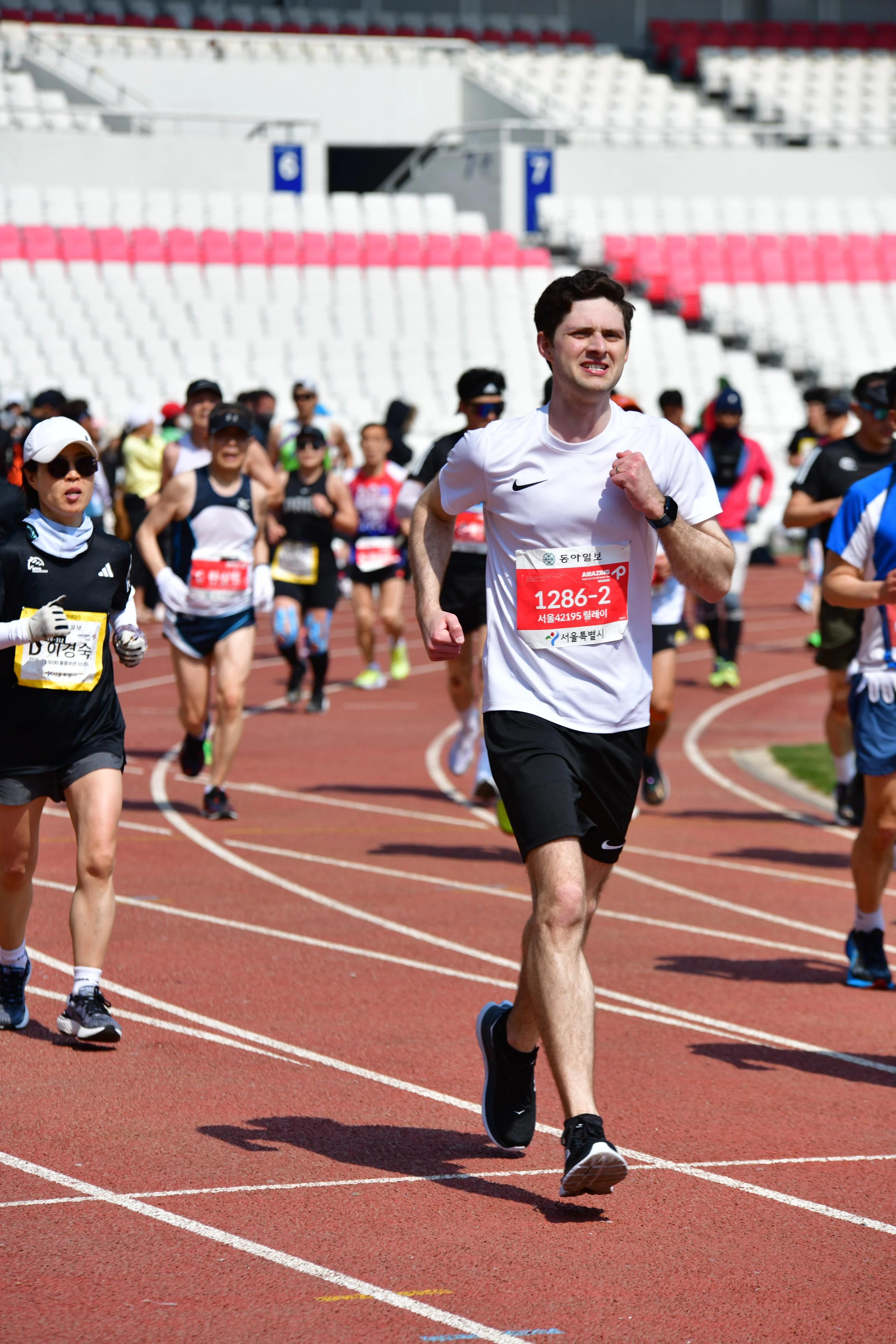
The best-dressed start line in the world
Seoul treats running gear the way it treats fashion, which is to say seriously. It is not unusual to warm up next to someone wearing an outfit worth more than 2 million won, around 1,500 dollars: a 300,000 won shirt, matching tights, sunglasses and headphones in the same bracket, and socks that cost more than my first pair of racing shoes. Carbon-plate shoes are the default at races now.
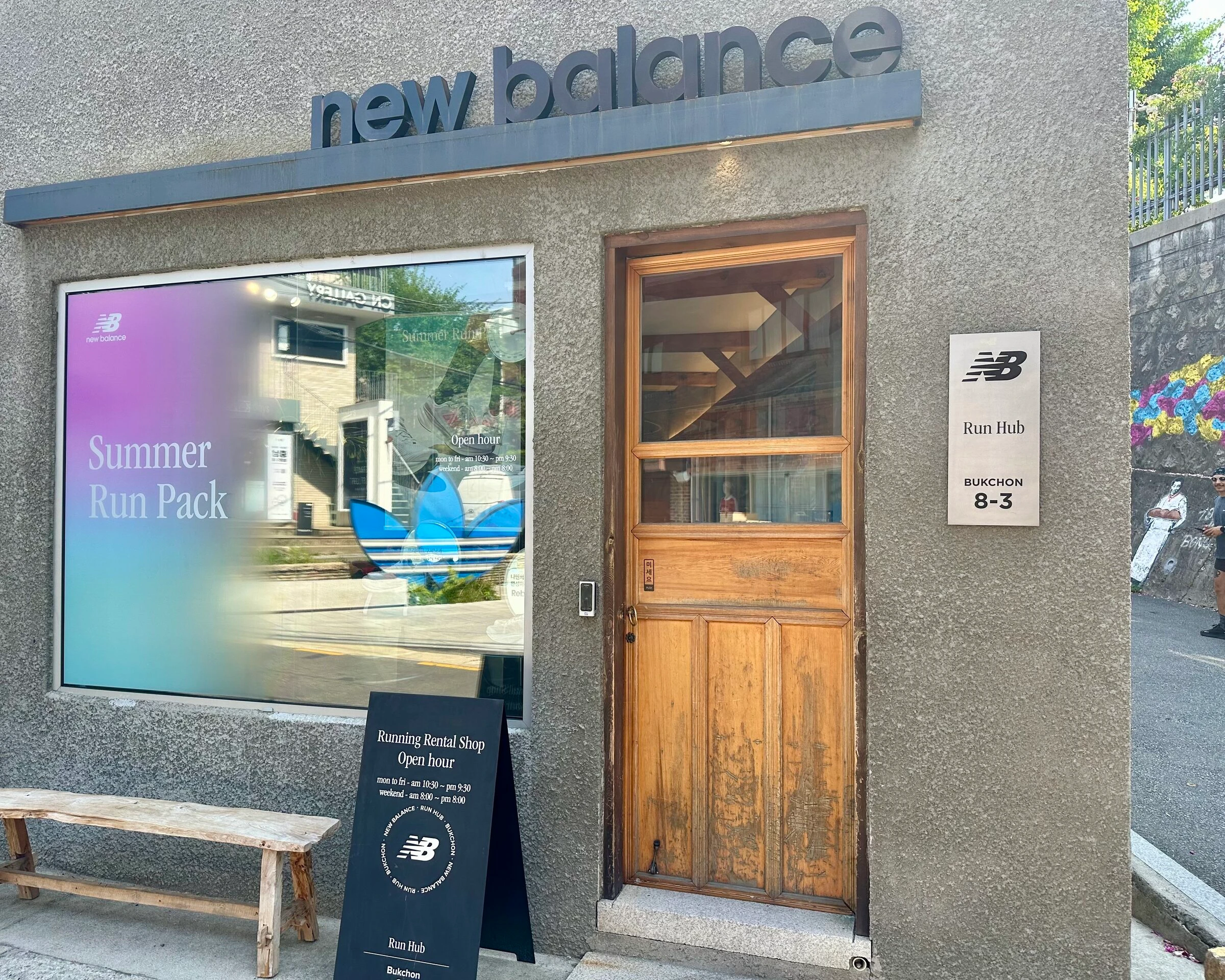
You do not need any of it, and nobody will judge your old t-shirt. But if you enjoy the culture of the sport, Seoul is a playground: flagship running stores cluster around the river neighborhoods, brand run clubs meet weekly, and local estimates put the domestic running market at roughly a trillion won a year. Window shopping the start line is part of the fun.
Running crews, then chicken and beer
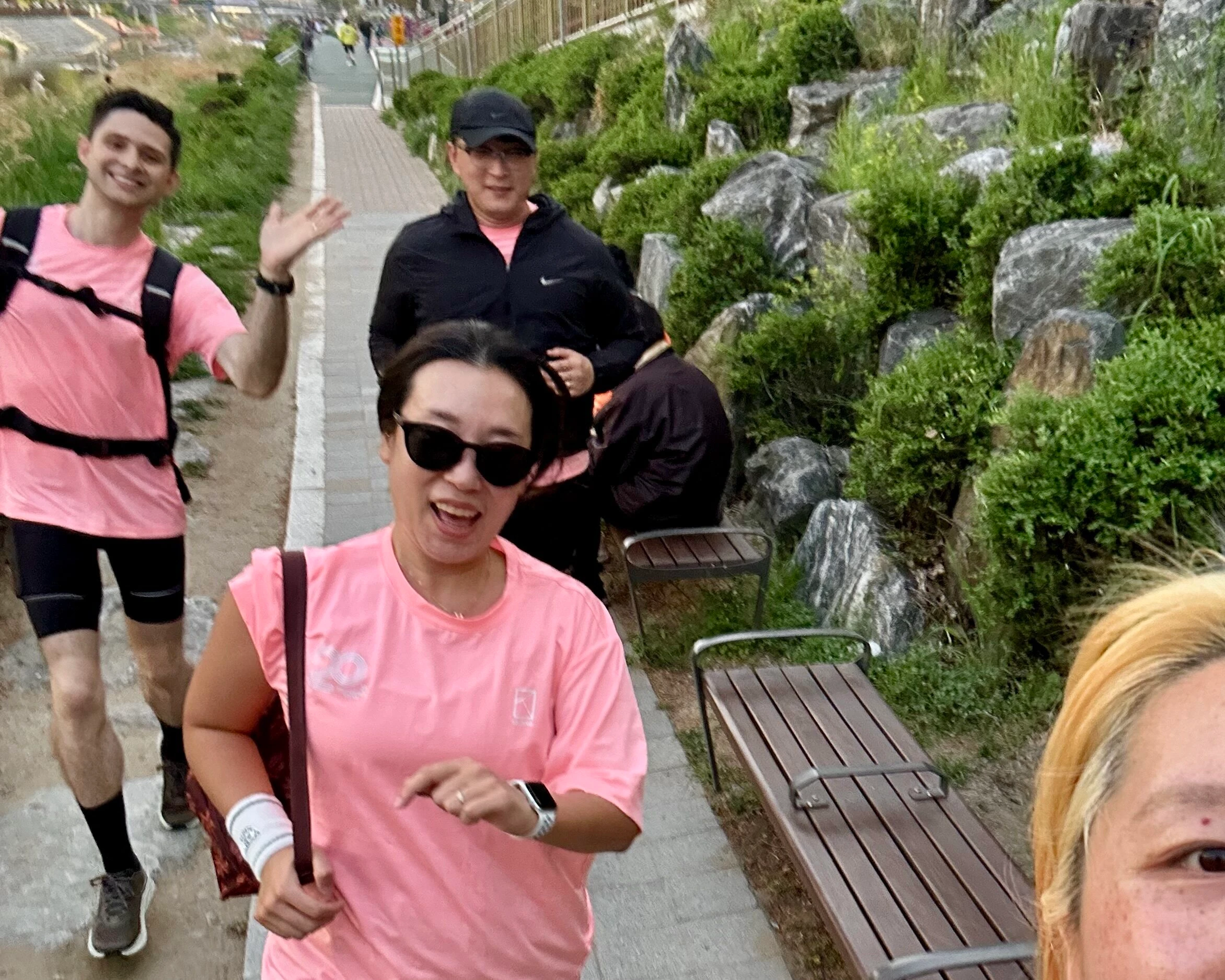
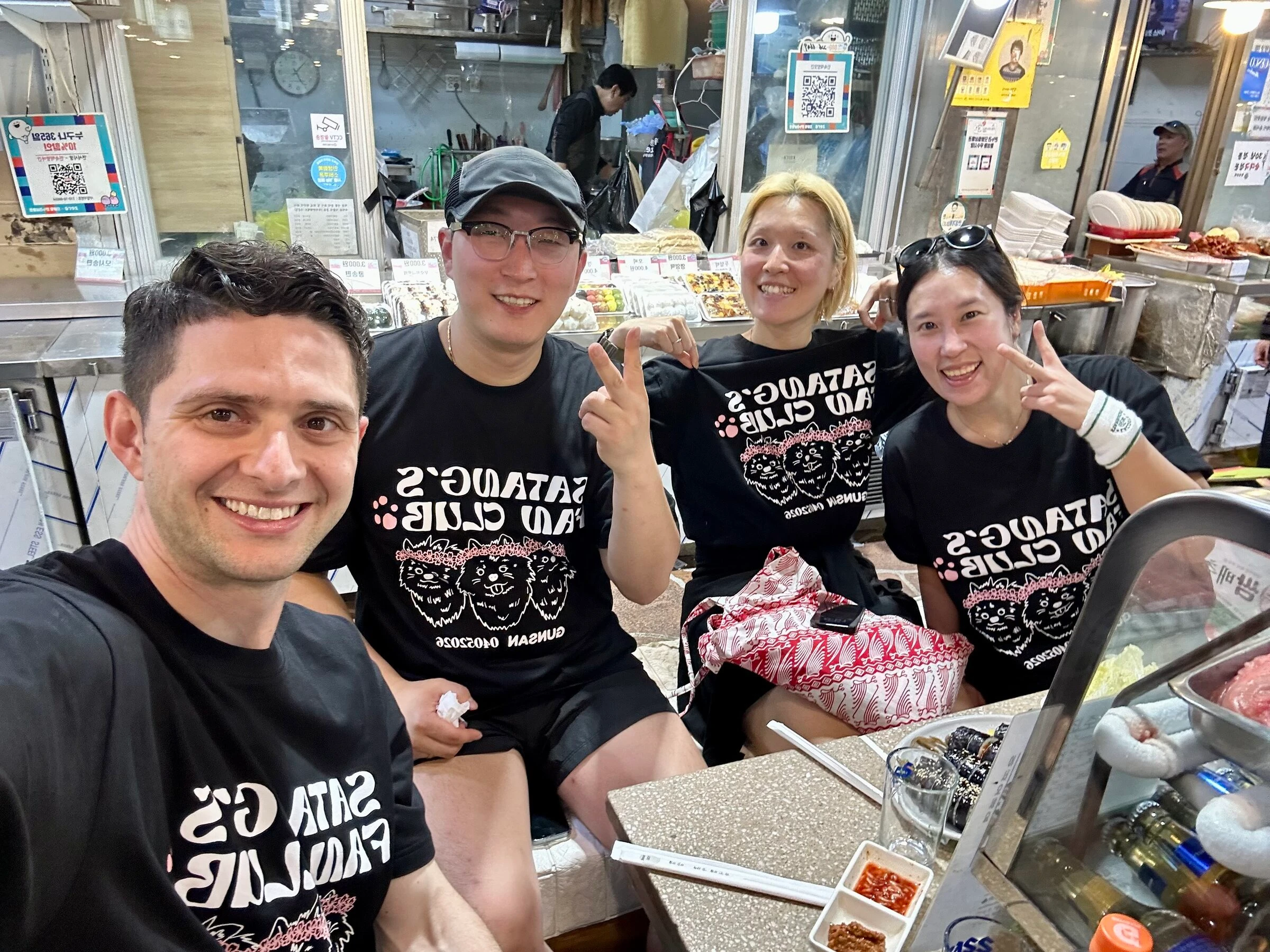
For a huge share of Seoul’s runners, this is a social sport. Crews meet on weeknights at the river parks, run in pace groups, photograph everything, and then eat. The post-run meal is chimaek, fried chicken and beer, and refusing it is harder than the workout.
Visitors can join. Seoul Flyers has welcomed English-speaking runners for years, and Korean crews across the city post open sessions on Instagram that take drop-ins, though the banter runs in Korean. Want the same experience in English, with the context filled in as you run? That is what my guided runs are for: we run a route I love, I point out what you are passing, and yes, the chicken and beer can be arranged. Still weighing it up? I compare the guided running tours and alternatives in Seoul, mine included, with prices and trade-offs side by side.
Seasons, weather, and air quality
Seoul runs all four seasons at full volume, and each one changes the sport. The short version: fall is the reward, spring is beautiful with an asterisk, summer is a discipline, and winter is underrated.
- Mar – May
Spring
Cherry blossoms turn the river paths into tunnels of white for two weeks in April. The catch is yellow dust: check the air quality before you head out, and on a bad day do what locals do and take it to a treadmill.
- Jun – Aug
Summer
Monsoon rain and real humidity. Locals switch to dawn and late evening runs, and the river stays surprisingly lively at both.
- Sep – Nov
Fall
The payoff season. Crisp air, clear skies, and nearly every race on the calendar. If you are choosing when to visit, choose this.
- Dec – Feb
Winter
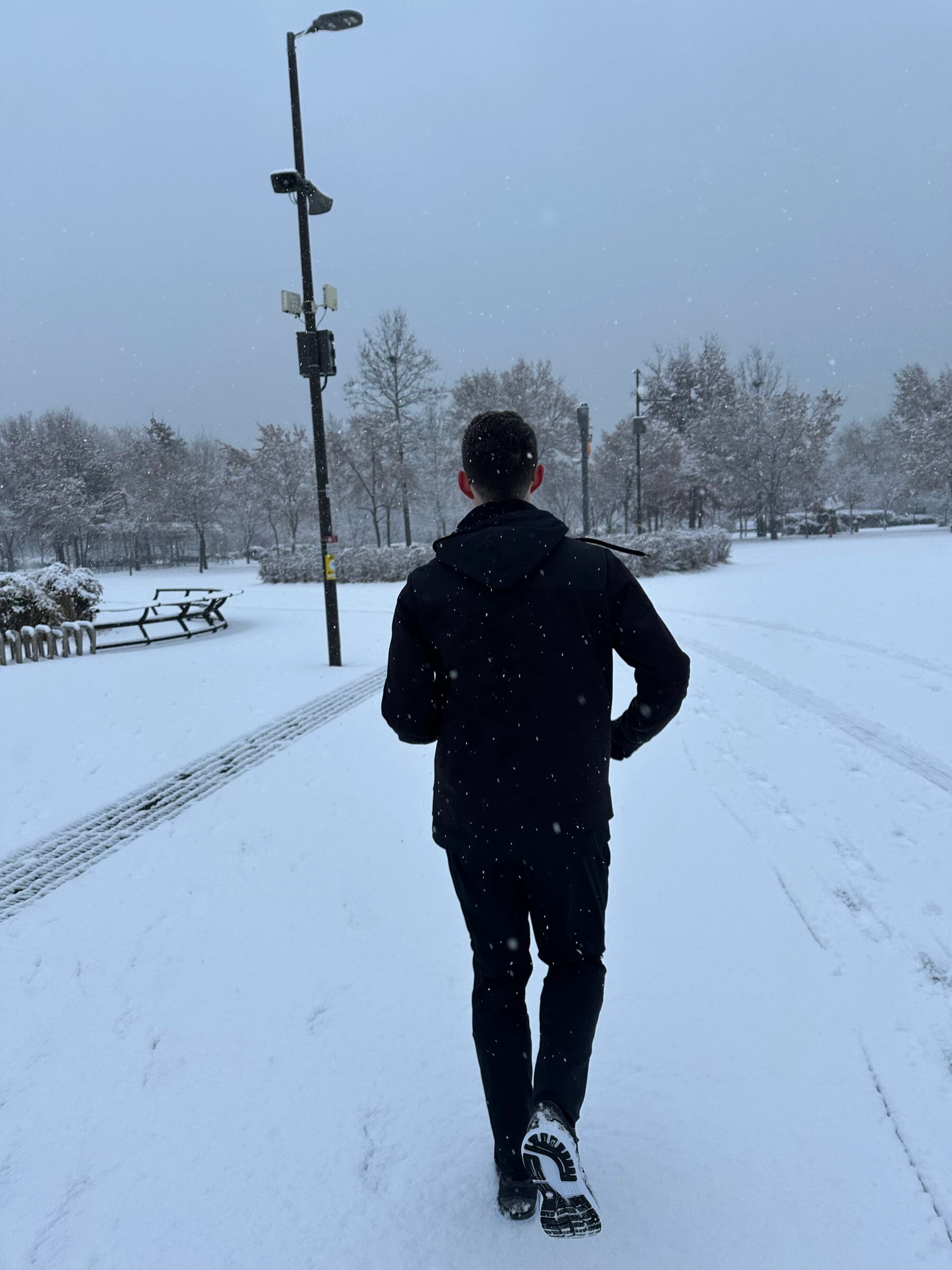
Cold and dry. Clear days are some of the best of the year, but still air can trap smog, so check the air reading. The paths empty out, the river freezes at the edges, and it is my favorite time to run here.
Before any run, our live Seoul running weather score grades the next hours on heat, rain, wind, and PM2.5 air quality, zone by zone along the river. It is the same tool I check every morning.
Races in Seoul worth planning a trip around
The Seoul Marathon in mid-March is the flagship: flat, fast, historic, and it now sells out in minutes. The Seoul Half follows in spring, and the JTBC Seoul Marathon closes the season in early November. Underneath the marquee events sits a layer most countries do not have: hundreds of local races through the year, many with fields in the thousands, small entry fees, and serious front packs. I plan my own racing year off this calendar.
We track every major race in Korea with dates, courses, registration windows, and cutoffs, so if your trip has a start line in it, that page is the place to plan.
Know before you run
- 01
Keep right, pass left
River paths are shared with cyclists who move fast. Stay on the pedestrian side where lanes are marked and hold your line.
- 02
You need almost nothing
Restrooms and water fountains sit roughly every two kilometers on the Han. Convenience stores on the path take cards, so a single card in your pocket covers water, snacks, and the subway home.
- 03
Use the free runner facilities
The Running Station at Yeouinaru is free to enter, with changing rooms, a stretching zone, even a body analyzer, and is open 06:00 to midnight. Its lockers are paid (from ₩2,200 for four hours on weekdays) through the T-locker (또타라커) app or a QR code. Namsan park keeps free keypad lockers and a changing cabin near the trailhead.
- 04
Shirts stay on
Even in August. Shirtless running reads as bad manners here, and at busy parks like Yeouido it is openly discouraged.
- 05
The subway is your shuttle
Every route in this guide starts within a short walk of a station. Trains run from about 5:30 a.m., so even dawn runs are reachable without a taxi.
- 06
Night running is normal
The river parks are lit, busy, and monitored late into the night. Solo runners of every age, men and women, are out at 10 p.m.
Running in Seoul: common questions
Is Seoul a good city for running?
One of the best in Asia. Over 100 km of car-free paved paths follow the Han River and its tributary streams, with restrooms, water fountains, and convenience stores directly on the route. Add mountain trails inside the city limits and one of the deepest amateur racing scenes in the world, and Seoul is a runner’s city.
When is the best time of year to run in Seoul?
April to May and September to November. Spring brings cherry blossoms along the river but occasional yellow dust days; fall is crisp, clear, and holds most of the race calendar. July and August are hot, humid, and rainy, so locals run at dawn. Winter is cold and dry. Clear days are some of the best of the year, but still air can trap smog, so check the air reading before you go.
Where do most people run in Seoul?
The Han River parks: Yeouido, Banpo, Ttukseom, Jamsil, and Mangwon. Beyond the river, runners use Namsan’s car-free hill road for climbing, Cheonggyecheon and Yangjaecheon streams for easy miles, and the Seoul City Wall and Bukhansan trails when they want mountains.
Is it safe to run in Seoul at night?
Yes. Seoul is one of the safest large cities in the world, and the river parks are lit and busy well after dark. Solo night runs are completely ordinary here for men and women alike.
How can a visitor find people to run with in Seoul?
Running crews post open sessions on Instagram and most welcome drop-ins, though sessions run mostly in Korean. For a run built around you, a guided run with a local covers the route, the pace, the history, and the post-run food in one booking.
Run Seoul with someone who races here.
A guided run puts a local at your shoulder who knows every water fountain, every shortcut, and every post-run meal. Tell me your pace and how far you want to go, and I will build the run around you.
Keep exploring: running routes ·today’s running weather ·the Korea race calendar